Product Design
Full Case Study
2025
TIMELINE
September - March 2025
TEAM
1 Designer, 1 Full Stack Developer
ROLE
Product Designer
SKILLS
Figma, Adobe Illustrator, FigJam, Client Relations
LONG STORY SHORT
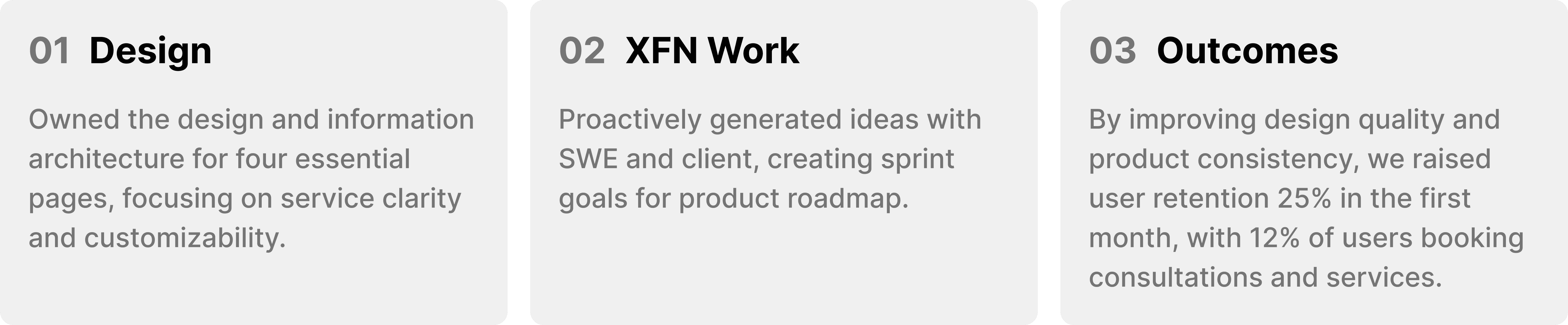
I worked with UPSTRIDE as a Contract Product Designer, leading the vision and design system to elevate design quality and ensure consistency across the client platform. I also helped shape new service features tailored to the needs of small businesses. Several key accomplishments included:
PROBLEM
Users struggled to understand the brand’s value due to a fragmented digital experience, resulting in low conversions and missed opportunities for client growth.
🤔
MARKET RESEARCH
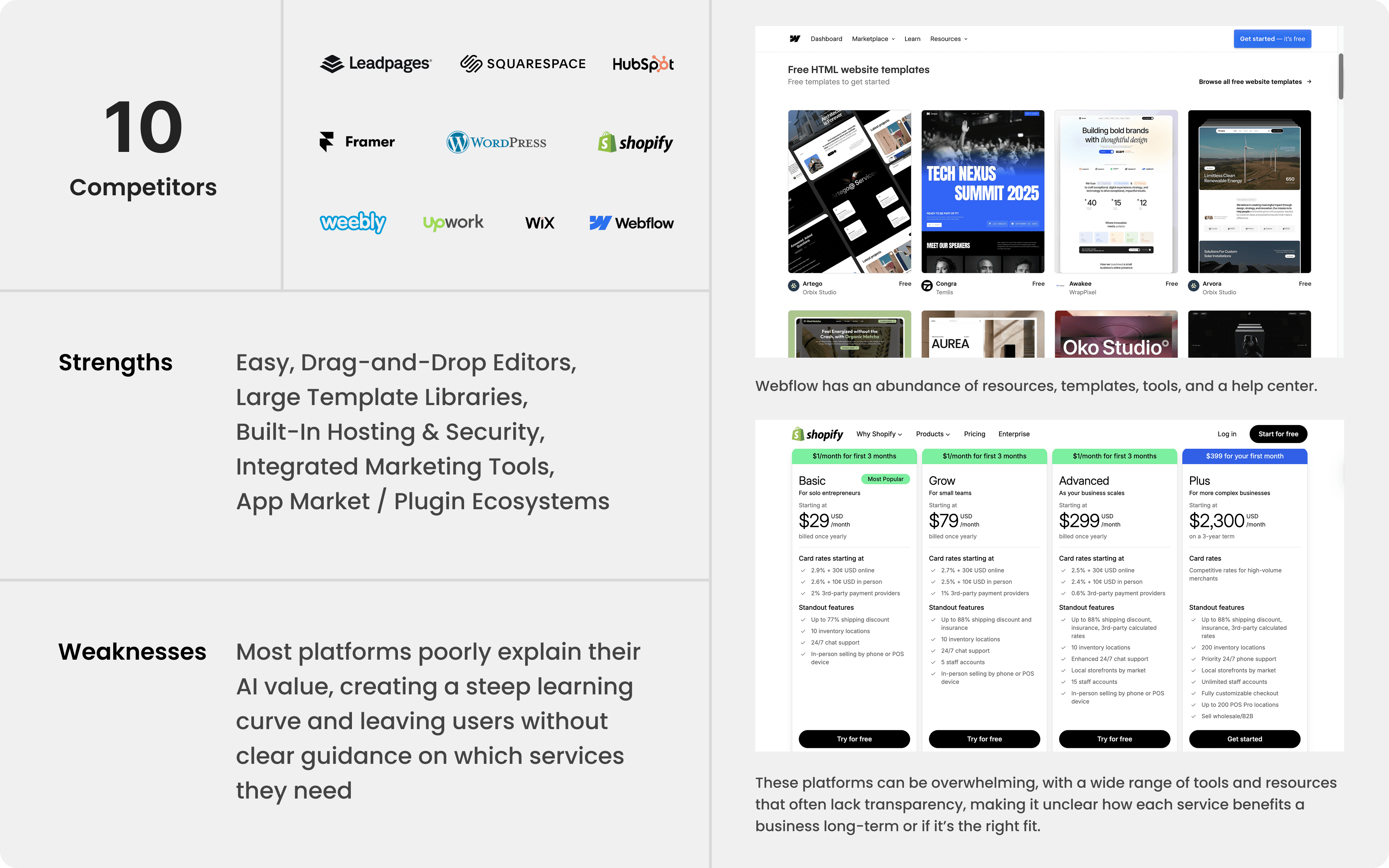
I looked at top platforms in the web creation and service space and noticed a lack of clear guidance and personalized support for small business owners.
SPEAKING TO USERS
Toy stores, small fashion boutiques, restaurants, and so many more—getting ranging perspectives was important because it led us to four main issues with expense management:
“When I try to set up my website, I get overwhelmed. I never know what step comes first, and the tools feel too technical for me.”
Difficulty Maintaining and Updating the Site
“Updating my site scares me. One small change can break the layout, so I avoid touching it, and then everything gets outdated.”
Lack of Clear Guidance on What’s “Essential”
“I’m not sure which features I actually need for my business. I end up paying for things I don’t use or choosing a platform that doesn’t really fit.”
Hidden Costs and Limited Support
“I keep running into hidden fees, and support is hard to reach. It makes me feel like I can’t trust the platform.”
OPPORTUNITIES
Based on key insights from user and market research, I defined several features focused on personalization:
📦
Packaged Solutions
Ready-made sites you can launch fast and expand with add-ons.
🤝
Simple communication through expert consults and an AI assistant.
🔧
Maintenance Assistance
Monthly management that keeps your site updated and secure.
🔍
Transparency
Clear pricing, service details, and performance insights.
EARLY STRUCTURE CONCEPT
Inspired by community-driven product ecosystems like the Figma Community, where transparency builds trust, I explored how UPSTRIDE’s internal tools could leverage AI automation to make service offerings and costs transparent and accessible.
DEFINING UPSTRIDE FEATURES
Key features based on research insights to better address core user problems.
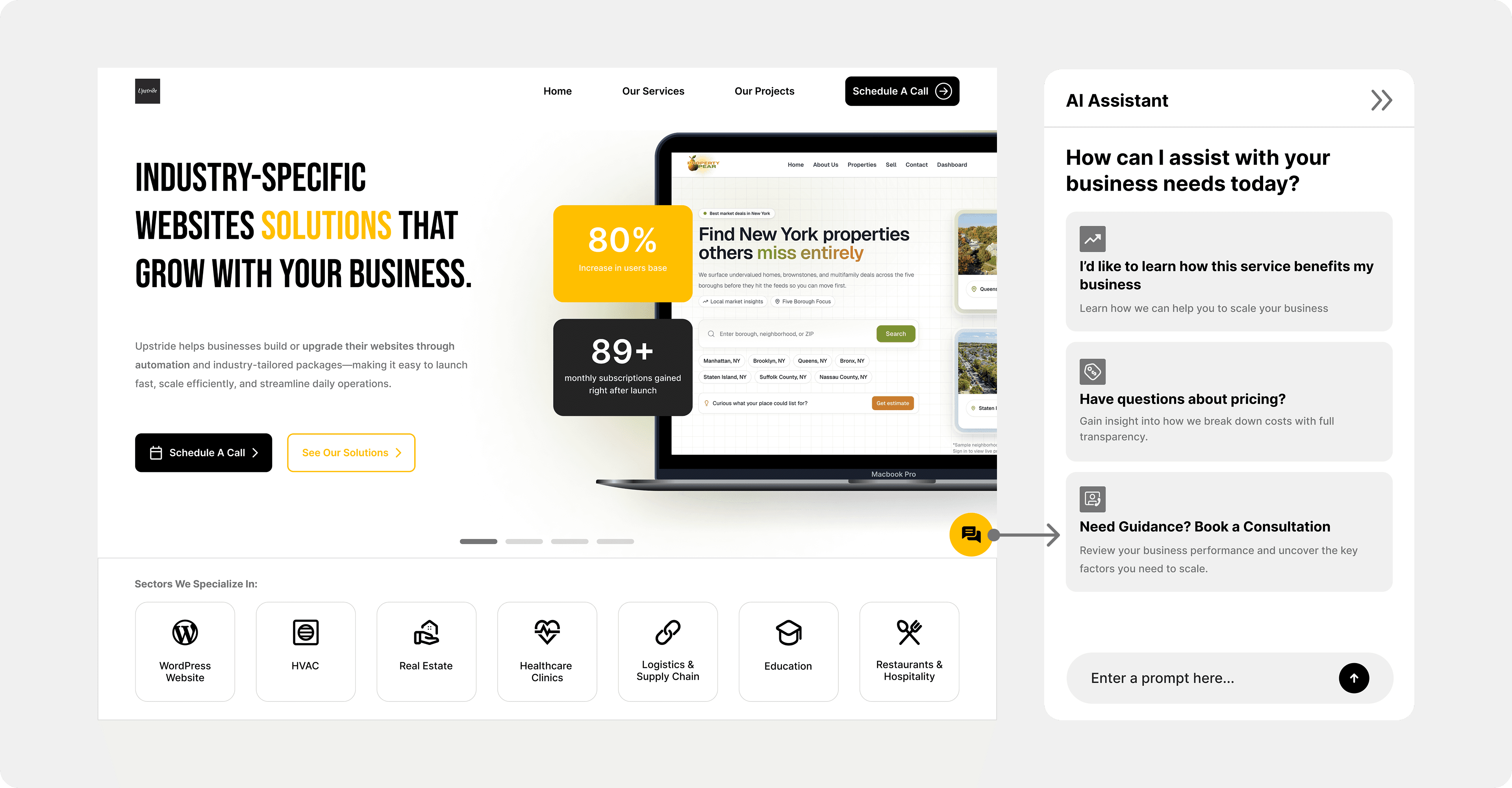
Clearer Hero: Impact & Metrics at a Glance
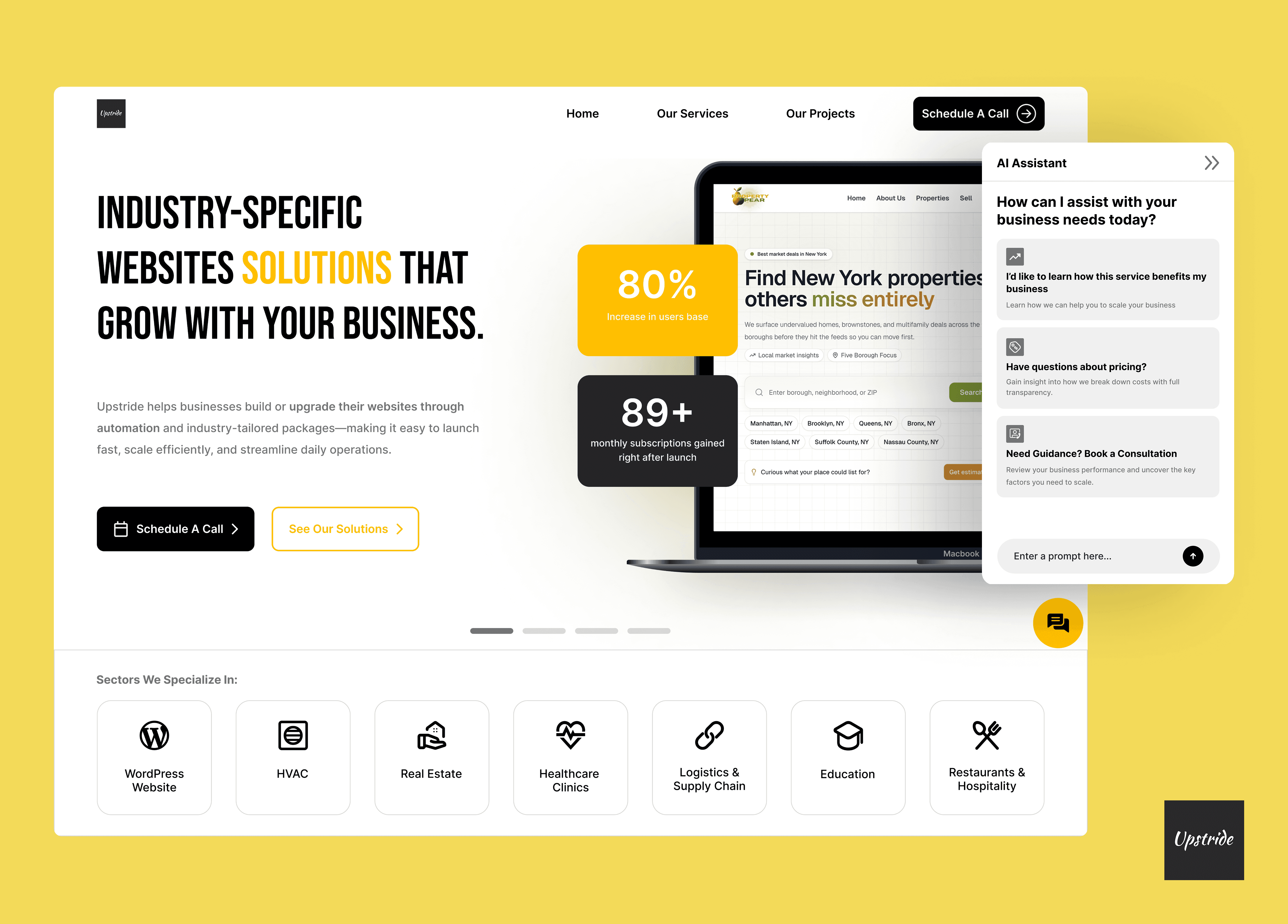
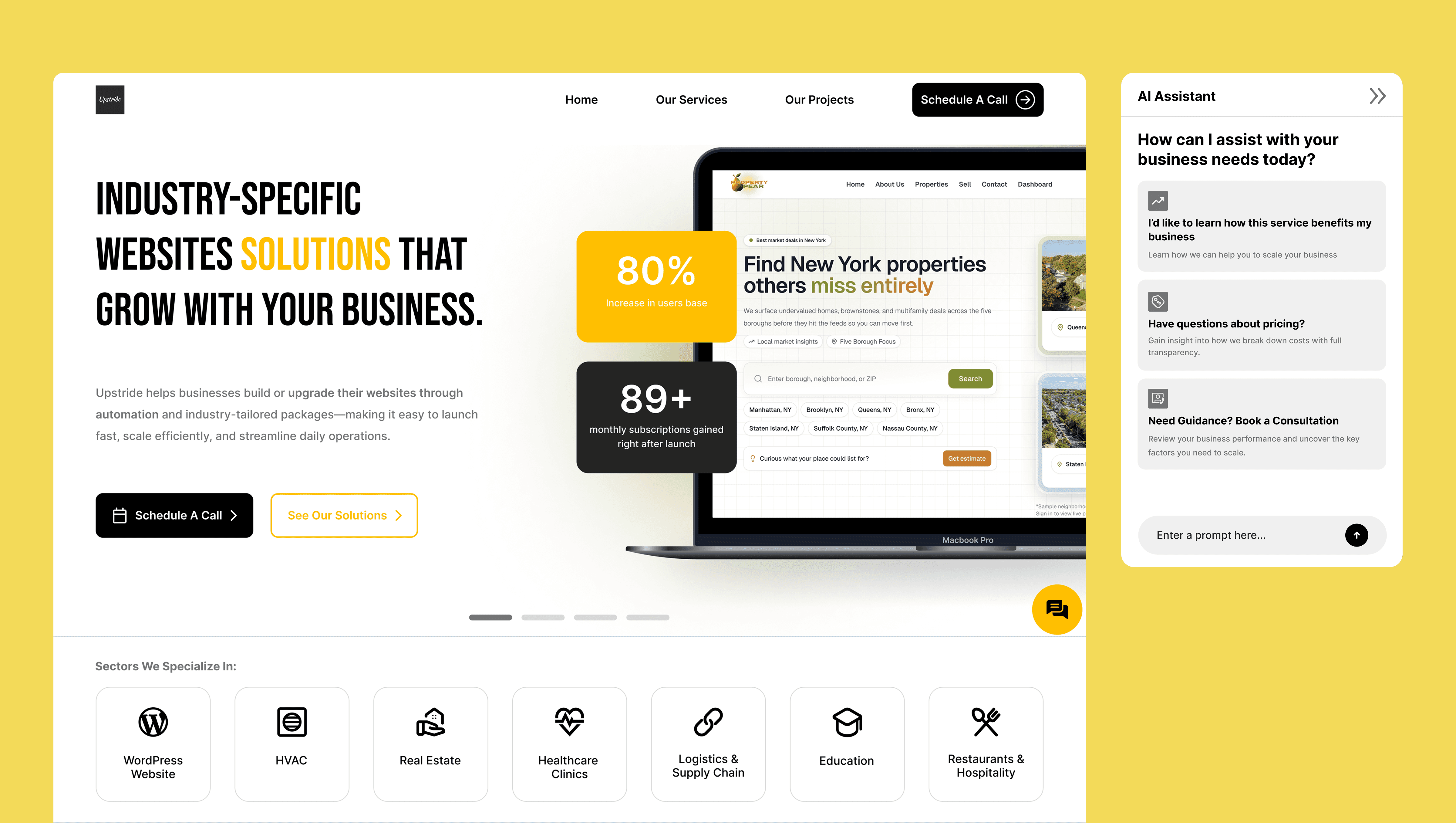
Enhanced the hero section to showcase our services through proven client success, featuring deliverable metrics, a sliding right preview screen, stronger CTAs, and clear sector highlights for instant value clarity.
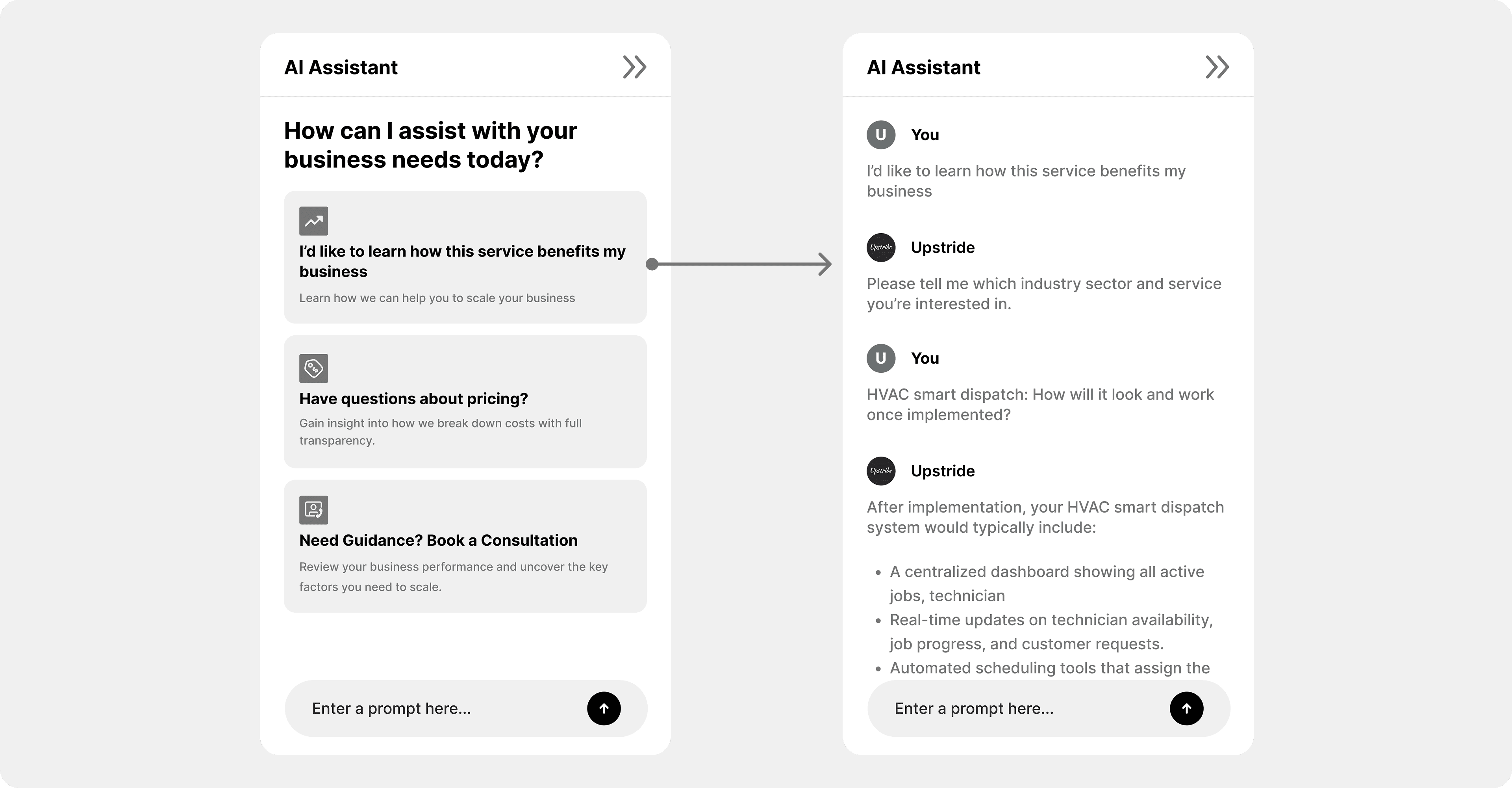
AI Contextual Sevice Helper
Connect your business challenges to an AI agent that communicates in human-like language and helps users navigate the platform.
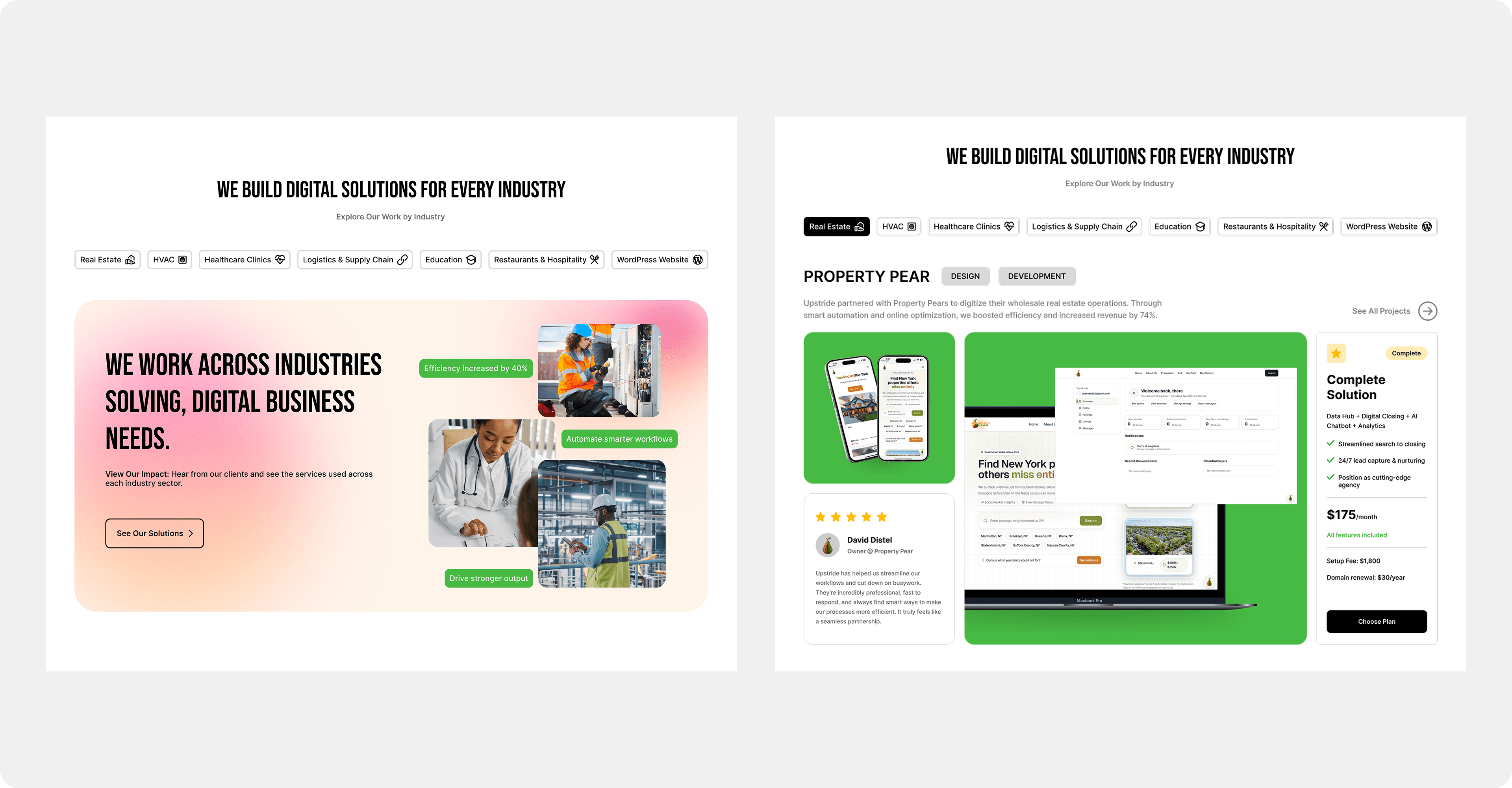
Unified Value Dashboard
Company Work Showcase & Benefits: Let's users easily filter and view client work, reviews, and services to see Upstride's total impact by industry.
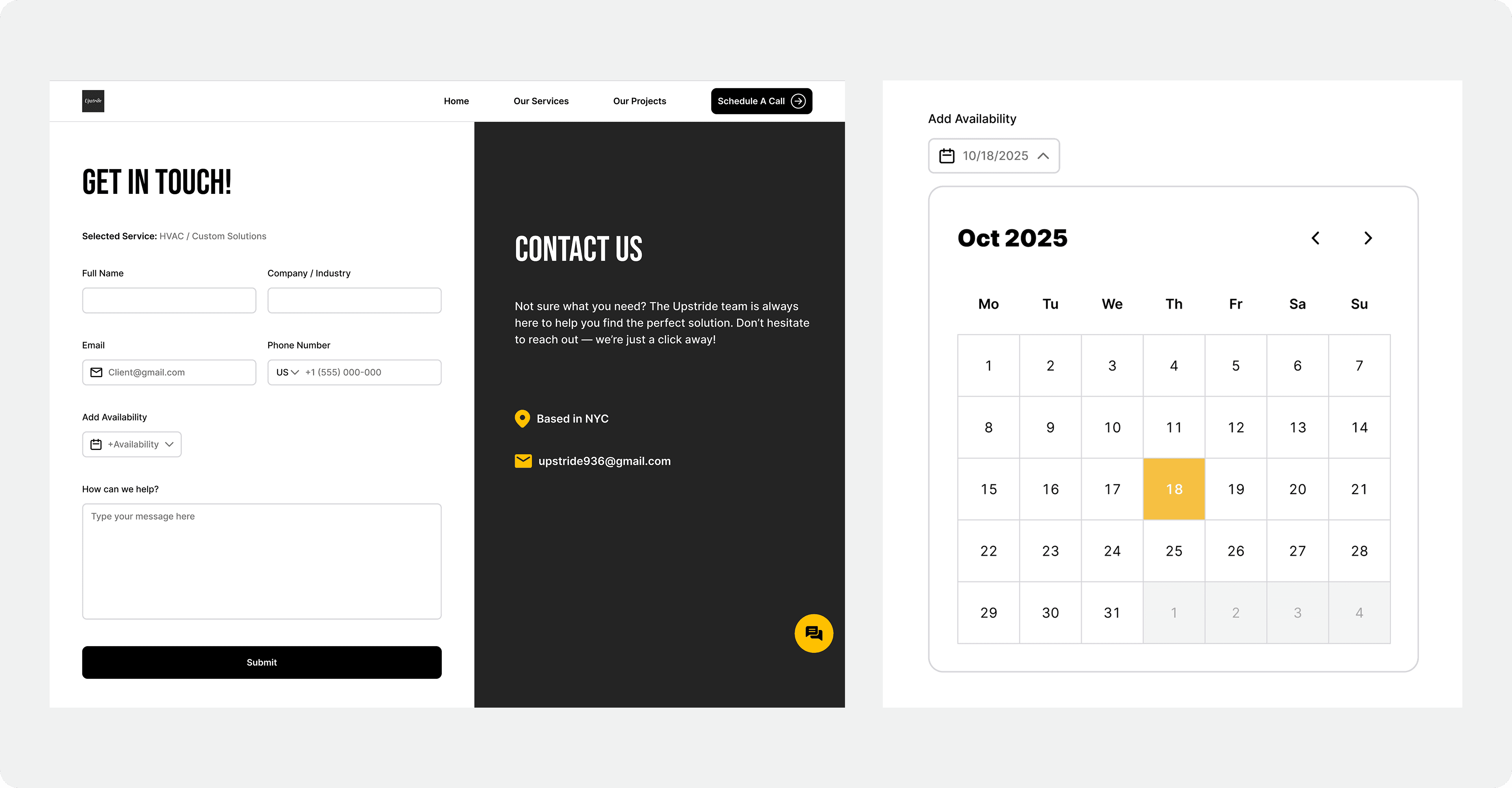
Dedicated Contacts Page
Take direct action through the dedicated contacts page to reach customers with inquiries, supported by expert guidance.
VISUAL LANGUAGE
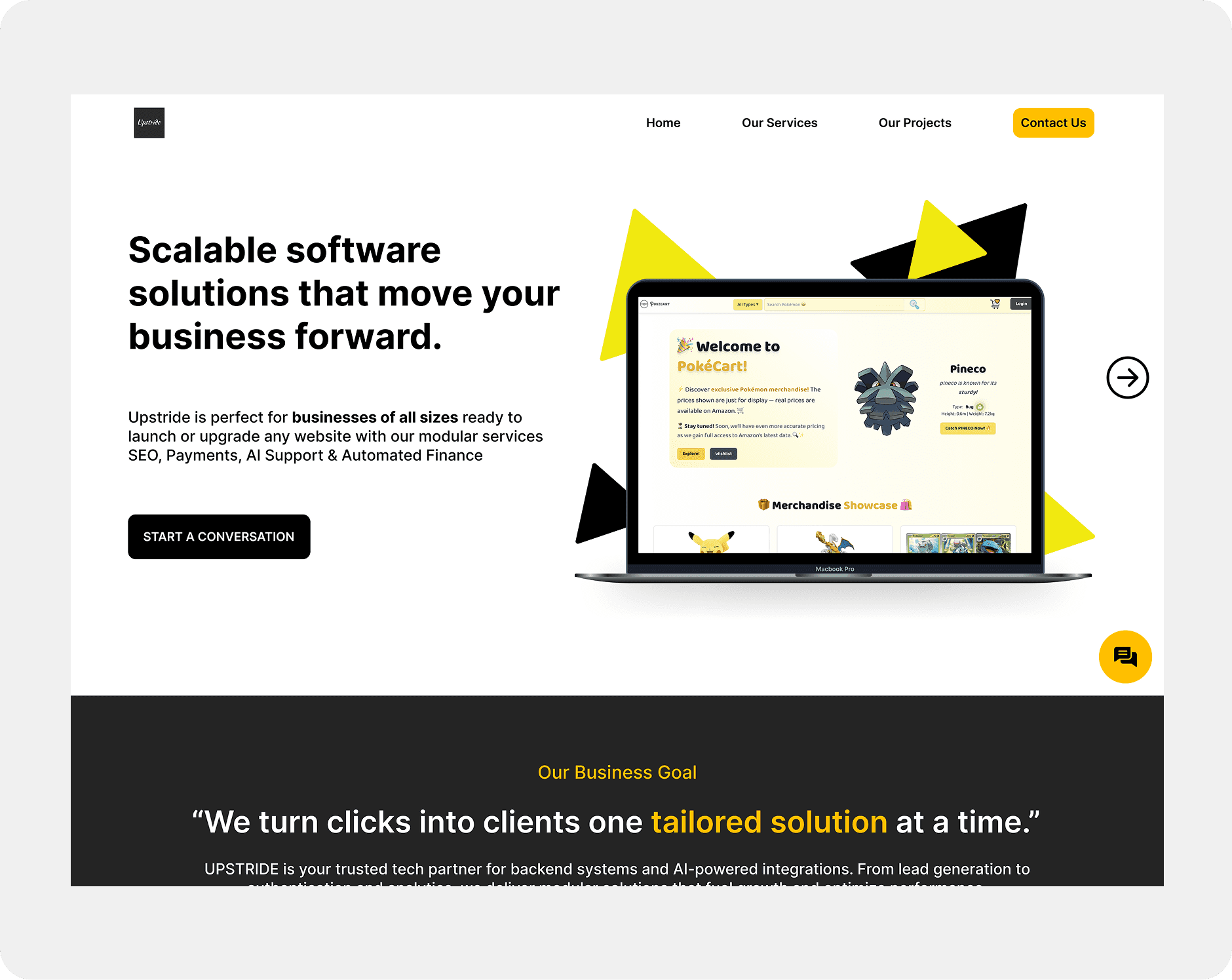
🌱 First Iteration
First homepage concept using the existing design system and client-provided content.
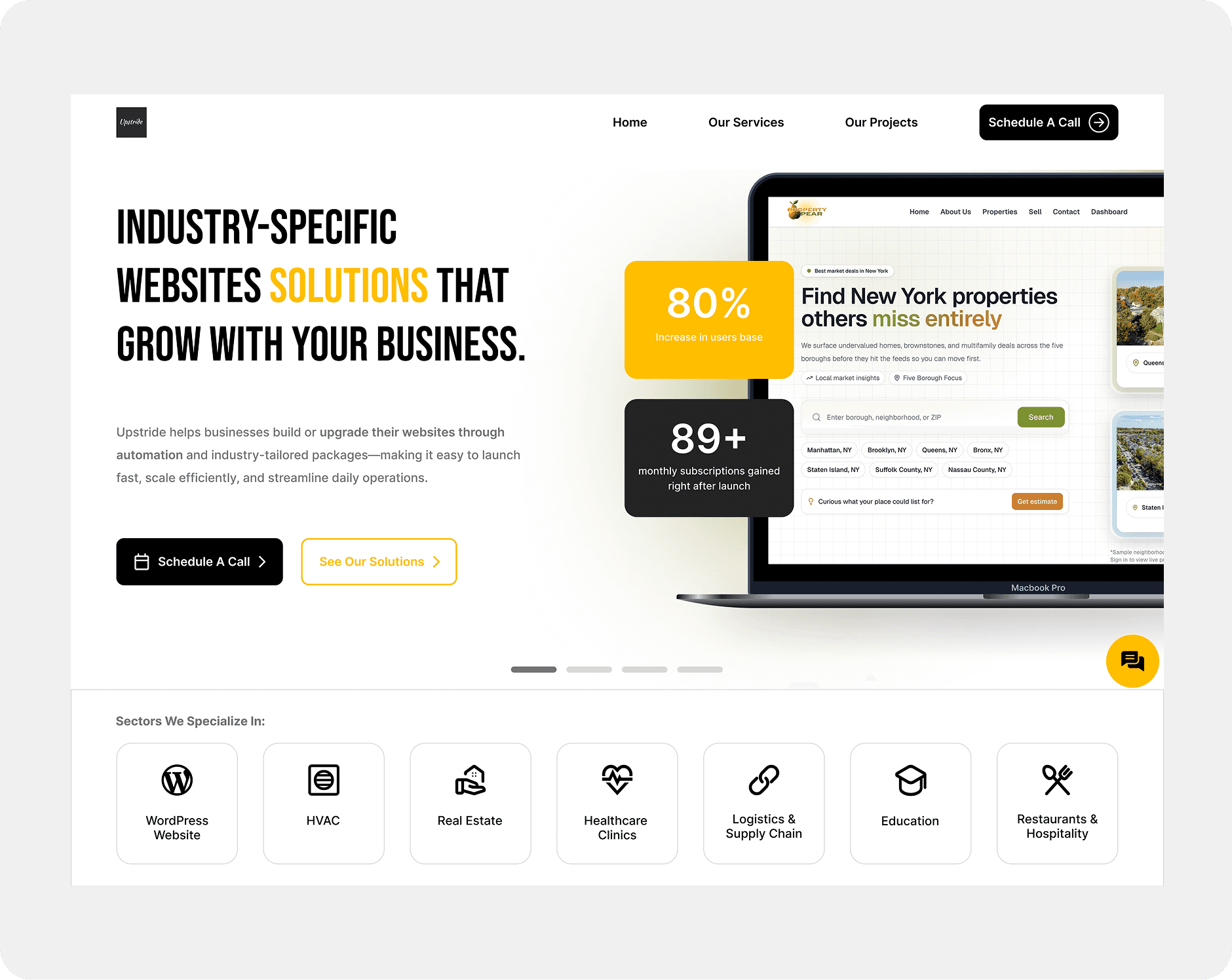
✨ Final Design
Refined visual design to create a more welcoming, impact-driven experience and improve business clarity.
FINAL DESIGNS


AI-Powered Dashboard Assistant
Chat with UPSTRIDE’s AI assistant to navigate the platform and get instant answers to business inquiries, saving time for both users and our client.

Streamline the Consultation Process for Faster Support
Take direct action through the dedicated contacts page to reach customers with inquiries, supported by expert guidance.

See our services in action across real client products.
See how our services deliver real value through live client products, testimonials, and the tools we use, everything in one clear view.


LEARNINGS & IMPACT
🗣️
Design advocacy grounded in research
I learned how to align design strategy with client goals by clearly articulating why decisions were made. Framing ideas around user value and business outcomes made stakeholders more receptive and shifted conversations from preference to impact.
🎨
Strategic use of design systems
Working within an established design system taught me when consistency supported usability and when thoughtful deviation was necessary to differentiate the product. Making deliberate, strategic design calls led to more expressive and purposeful outcomes without compromising cohesion.
⏱️
Prioritizing impact under real constraints
Tight timelines and client pushback sharpened my ability to make tradeoffs, prioritize high-impact features, and deliver a product end to end. I focused effort where it created the most value while maintaining quality and momentum.