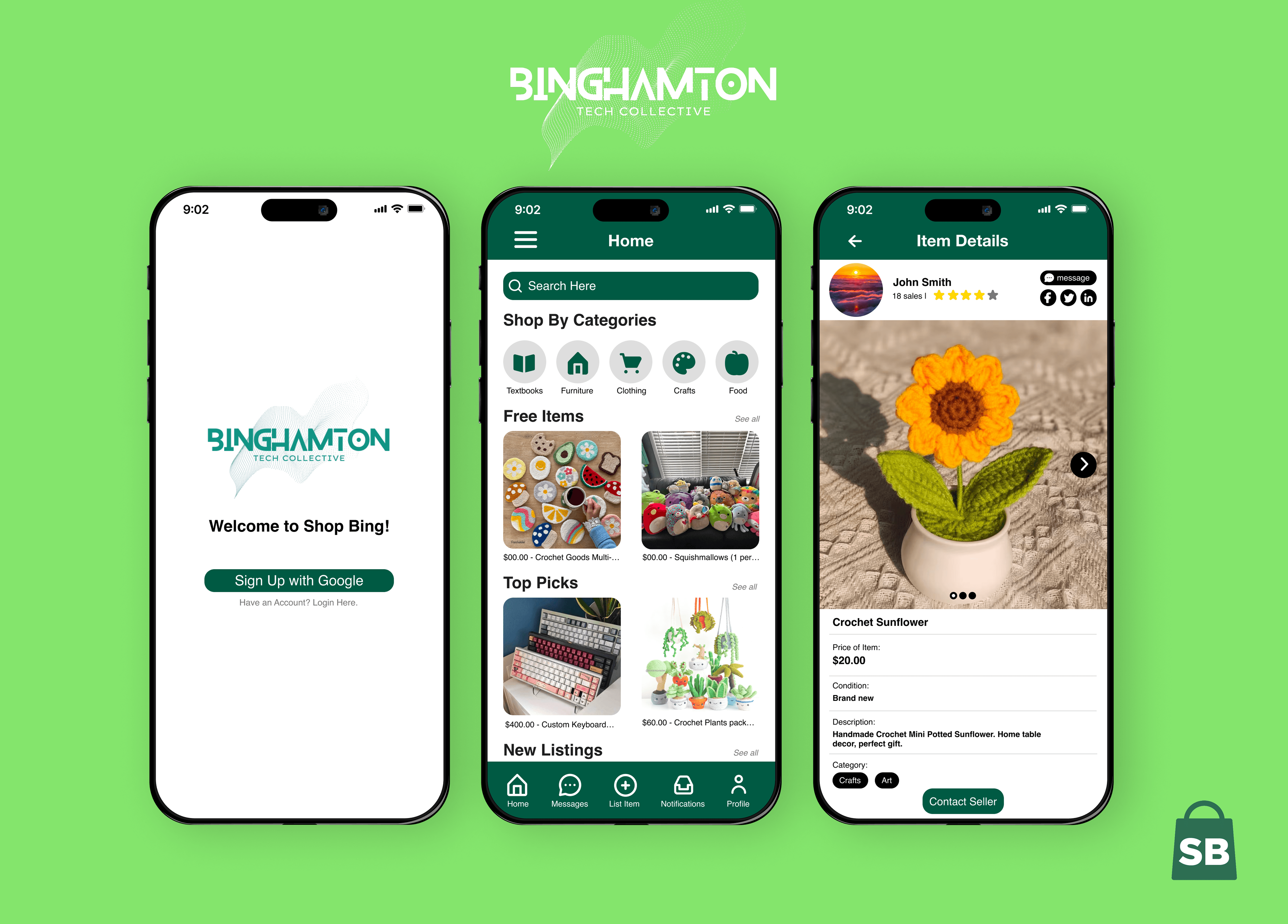
Binghamton Students' one-stop shop for buying and selling goods.
Binghamton Students' one-stop shop for buying and selling goods.
Binghamton Students' one-stop shop for buying and selling goods.
Role
UX Designer: I gathered key insights during the research, design, and development process, working closely with the SWE team and PM to create a smooth user experience and support a successful launch.
Context
Started Fall 2023, WIP
Student Project
Tools
Figma, FigJam, Adobe Illustrator,
Google Docs
Team
UX: Lucy Pham, Winnie Yong, Emma
Sandison
PM: Manjot Kaur
SWE: Levi Lesches, Samuel Montes,
Harsh Vaghani, Obadiah Smolenski,
Samruddhi Deshpande, Abdulaziz
Shaikh
Skip to Final Product


Binghamton Tech Collective, founded in the Summer of 2023, is a student-run organization dedicated to helping Binghamton students gain meaningful project experience. I worked with a team of UX designers to design and launch Shop Bing, an e-commerce app that enables Binghamton University students to buy and sell used goods securely through university-affiliated email verification.
Binghamton Tech Collective, founded in the Summer of 2023, is a student-run organization dedicated to helping Binghamton students gain meaningful project experience. I worked with a team of UX designers to design and launch Shop Bing, an e-commerce app that enables Binghamton University students to buy and sell used goods securely through university-affiliated email verification.
PROBLEM
Binghamton students lack a dedicated, secure marketplace to buy and sell goods within their community.
Binghamton students lack a dedicated, secure marketplace to buy and sell goods within their community.
Many students end up with unused textbooks, furniture, and other essentials, yet struggle to find the right buyers. While some turn to Snapchat stories or third-party platforms like eBay, these options are unreliable and often fail to connect them with fellow students. On the other hand, buyers looking for specific items such as graduation gowns must search across multiple platforms, making the process frustrating and inefficient.
Many students end up with unused textbooks, furniture, and other essentials, yet struggle to find the right buyers. While some turn to Snapchat stories or third-party platforms like eBay, these options are unreliable and often fail to connect them with fellow students. On the other hand, buyers looking for specific items such as graduation gowns must search across multiple platforms, making the process frustrating and inefficient.
SOLUTION
A student-focused app that makes selling and purchasing secondhand goods easy.
A student-focused app that makes selling and purchasing secondhand goods easy.
After conducting campus-wide user research, we aimed to bridge this gap by developing Shop Bing, a platform designed to help students buy and sell more efficiently within their community and target audience.
After conducting campus-wide user research, we aimed to bridge this gap by developing Shop Bing, a platform designed to help students buy and sell more efficiently within their community and target audience.
OUTCOME
Successfully launched a web application open to Binghamton University students.
Successfully launched a web application open to Binghamton University students.
Shop Bing was launched as a web app in the following semester! We are currently focused on developing a notification system and preparing for the app’s release on the Apple App Store and Google Play Store.
Shop Bing was launched as a web app in the following semester! We are currently focused on developing a notification system and preparing for the app’s release on the Apple App Store and Google Play Store.
Design Process
Design Process
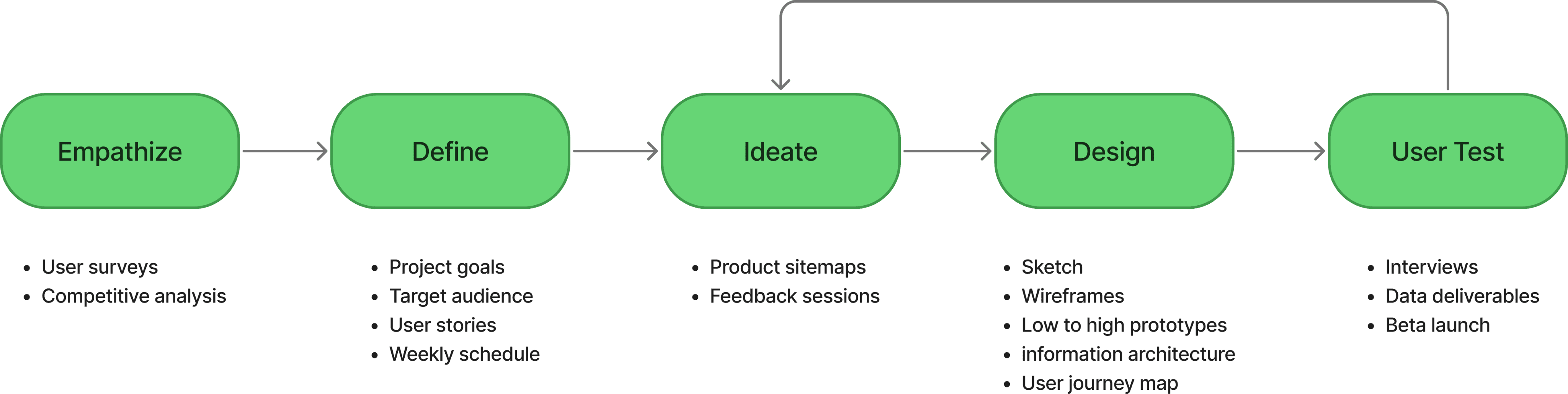
A concise overview of the structure and approach behind our design.
A concise overview of the structure and approach behind our design.
EMPATHIZE
Let’s Take a Look at The Competition
Let’s Take a Look at The Competition
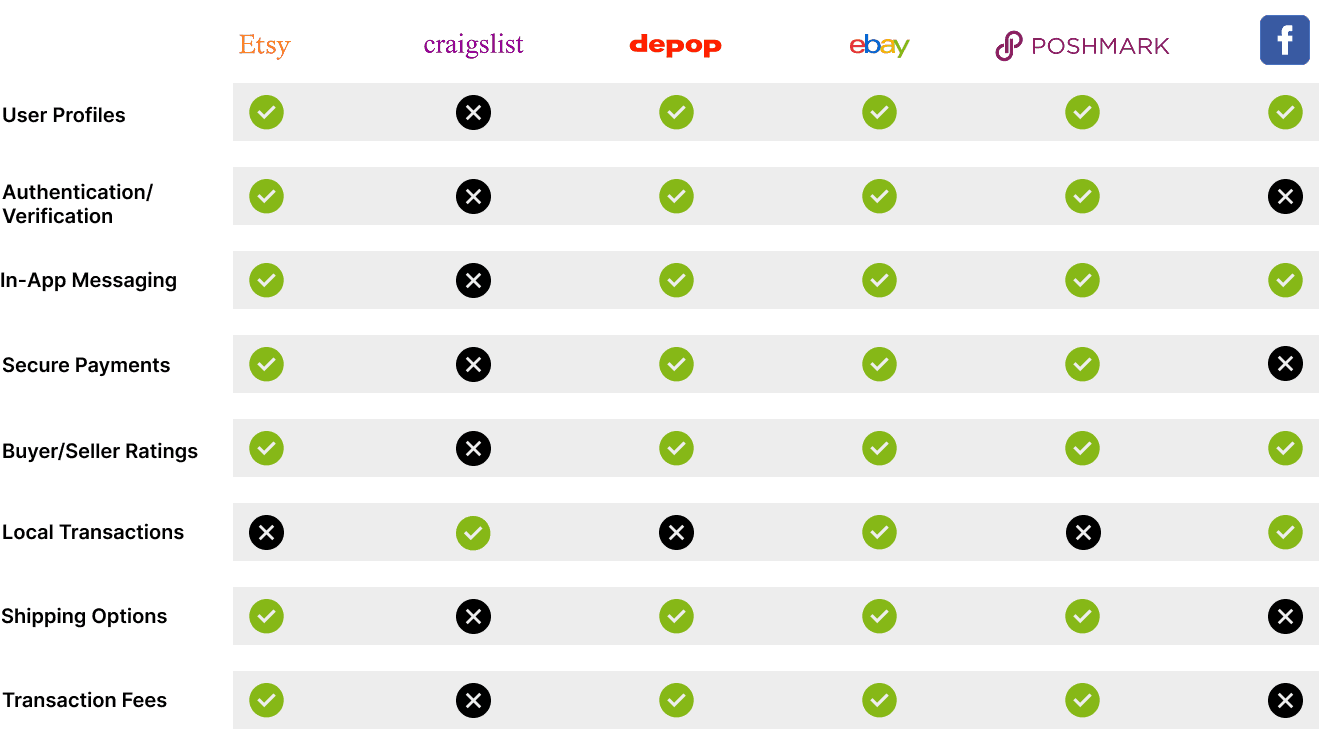
We began with a competitive audit to benchmark our app's features, analyzing similar buying and selling platforms like Craigslist, Facebook Marketplace, Depop, eBay, Poshmark, and Etsy.
We began with a competitive audit to benchmark our app's features, analyzing similar buying and selling platforms like Craigslist, Facebook Marketplace, Depop, eBay, Poshmark, and Etsy.
Competitive Analysis
Student Surveys
Student Surveys
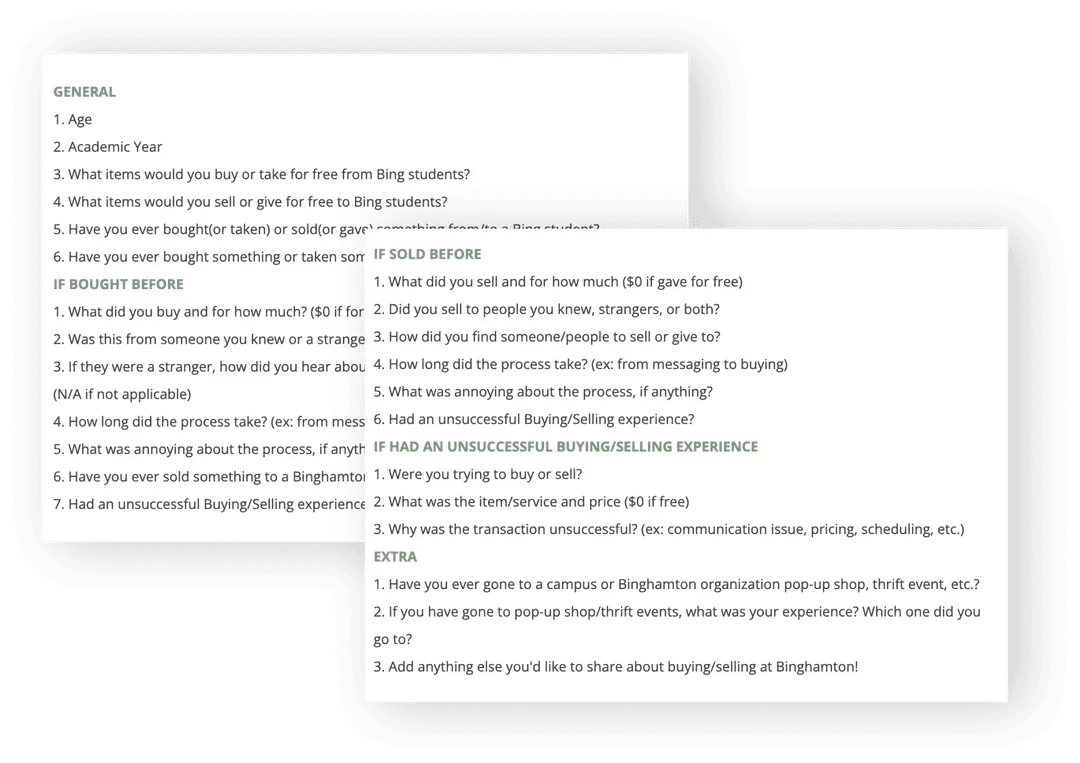
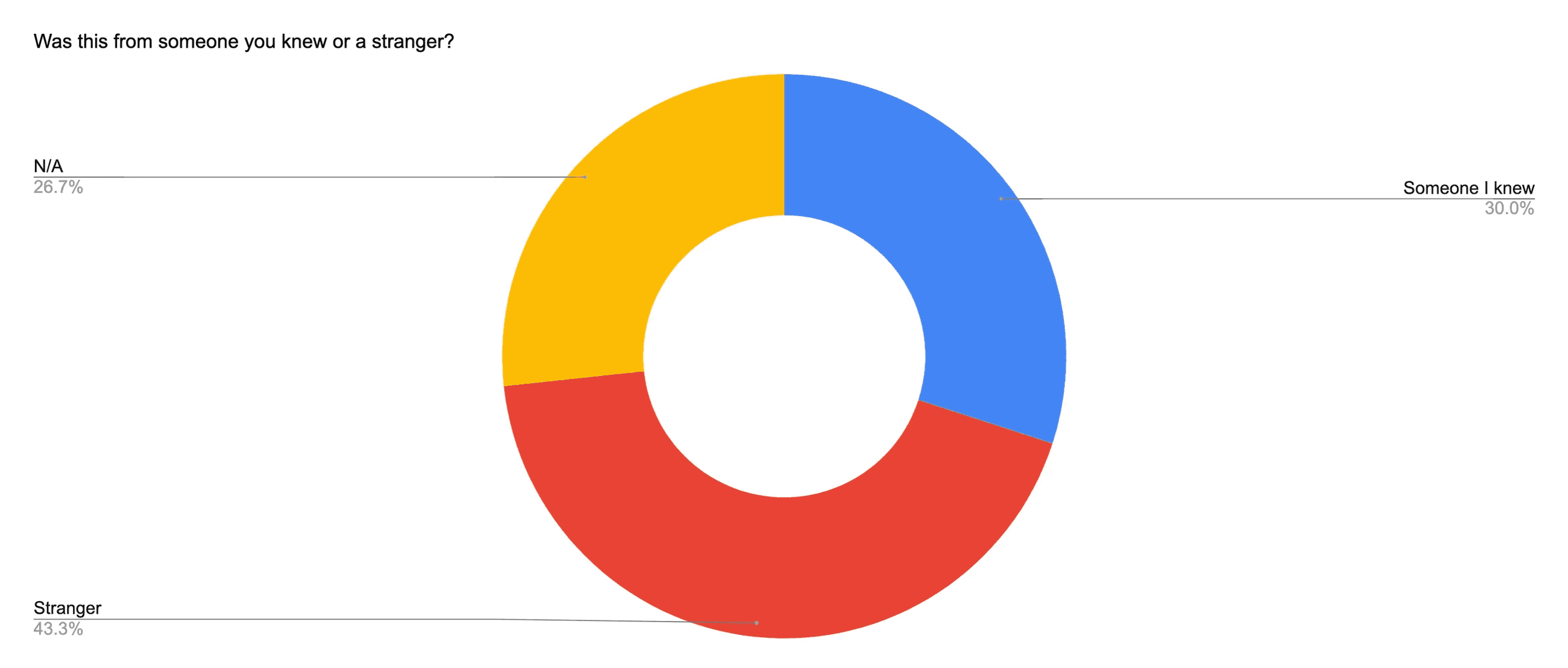
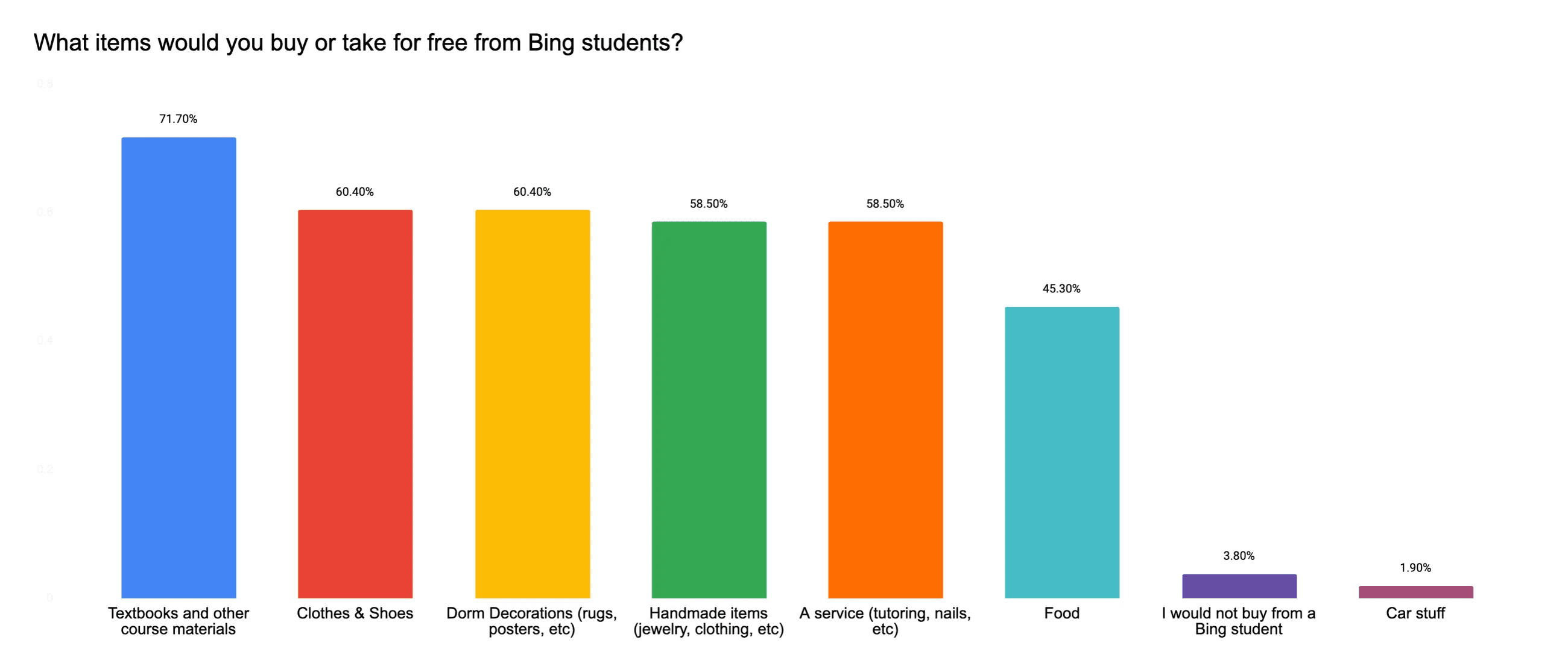
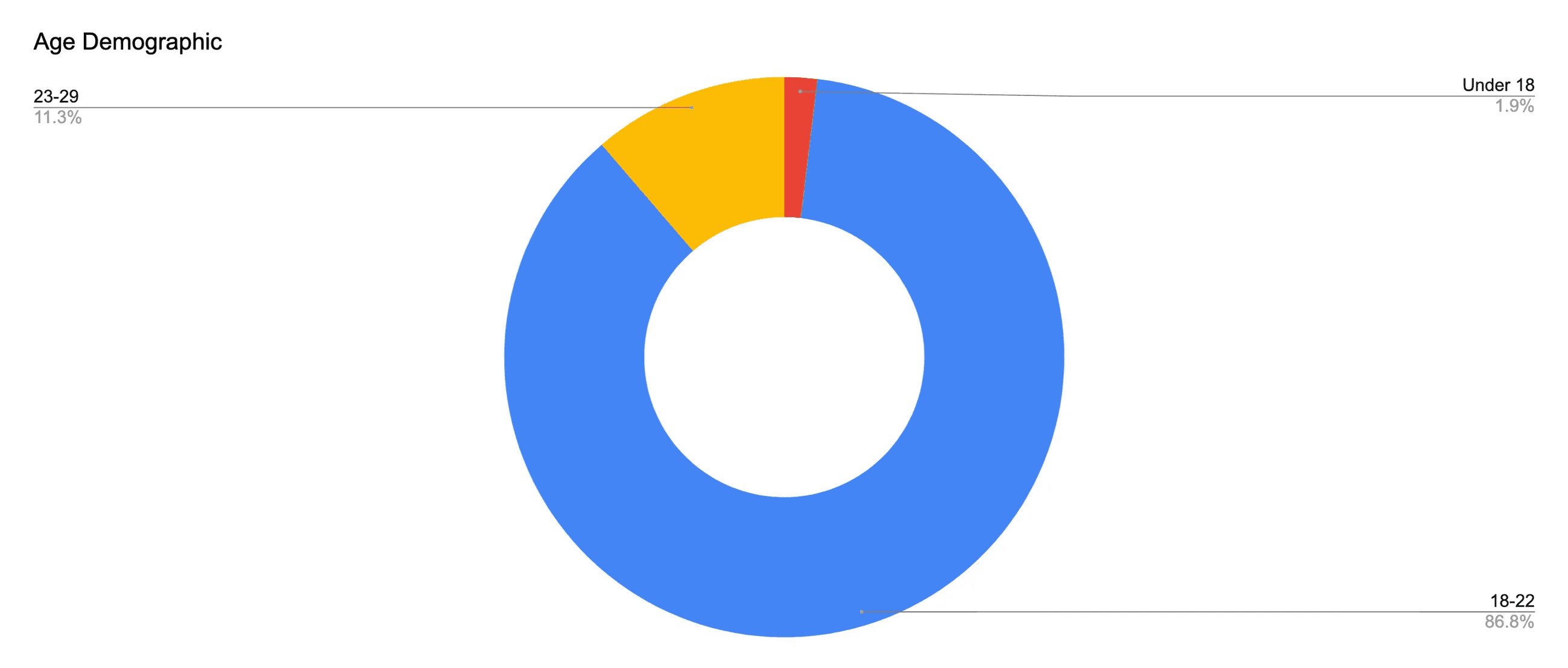
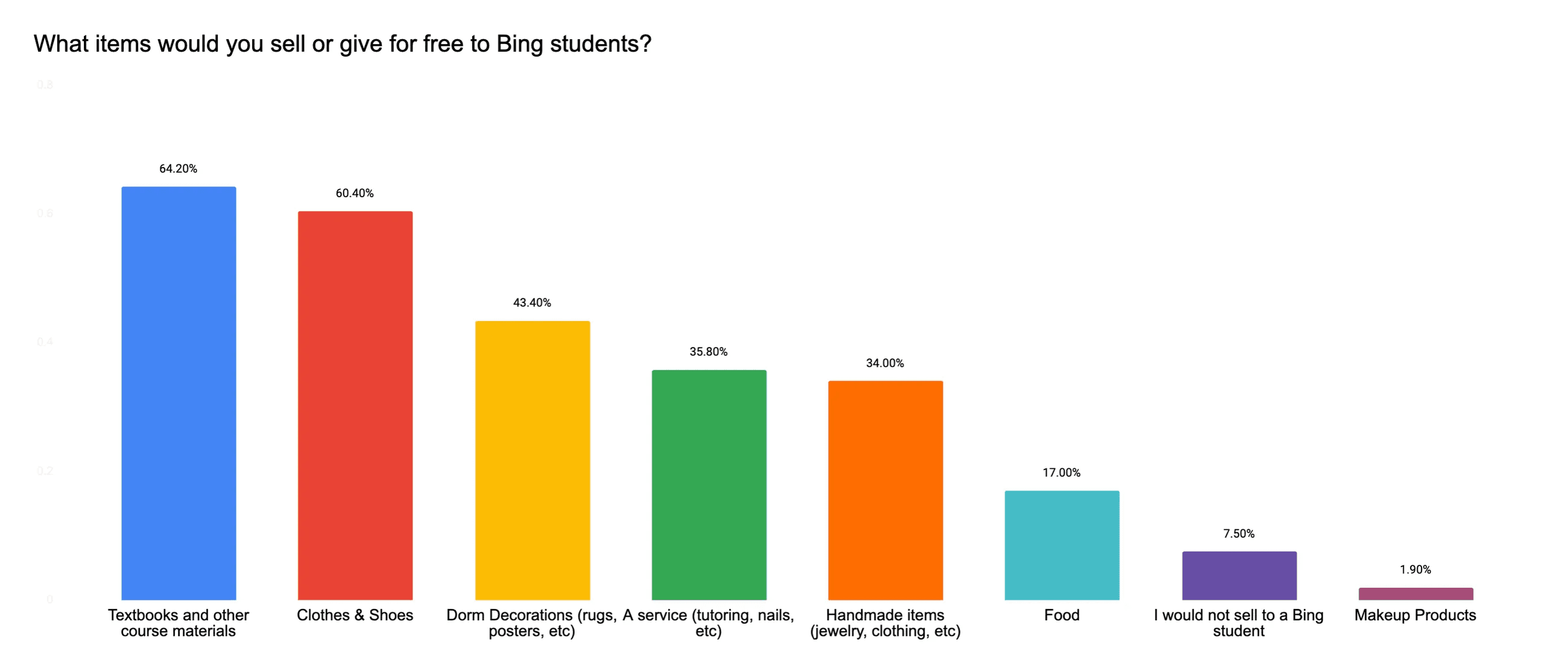
After evaluating current platforms, we examined 53 responses from our Buying/Selling App Survey to gain deeper insights into user behavior:
After evaluating current platforms, we examined 53 responses from our Buying/Selling App Survey to gain deeper insights into user behavior:
64% of respondents were interested in selling or donating textbooks and course materials.
72% expressed willingness to purchase or accept textbooks and course materials for free.
60% indicated they would sell or give away clothing and footwear.
Students showed a stronger tendency to purchase a diverse range of items rather than selling or giving them away for free.
64% of respondents were interested in selling or donating textbooks and course materials.
72% expressed willingness to purchase or accept textbooks and course materials for free.
60% indicated they would sell or give away clothing and footwear.
Students showed a stronger tendency to purchase a diverse range of items rather than selling or giving them away for free.
Survey Findings
Survey Findings
Based on our survey responses, we identified three key user groups:
Student Sellers – Those looking to sell or give away items.
Student Buyers – Those interested in purchasing or receiving items for free.
Event Seekers – Students looking to attend buying/selling events.
Affinity Mapping
Affinity Mapping
Affinity Mapping
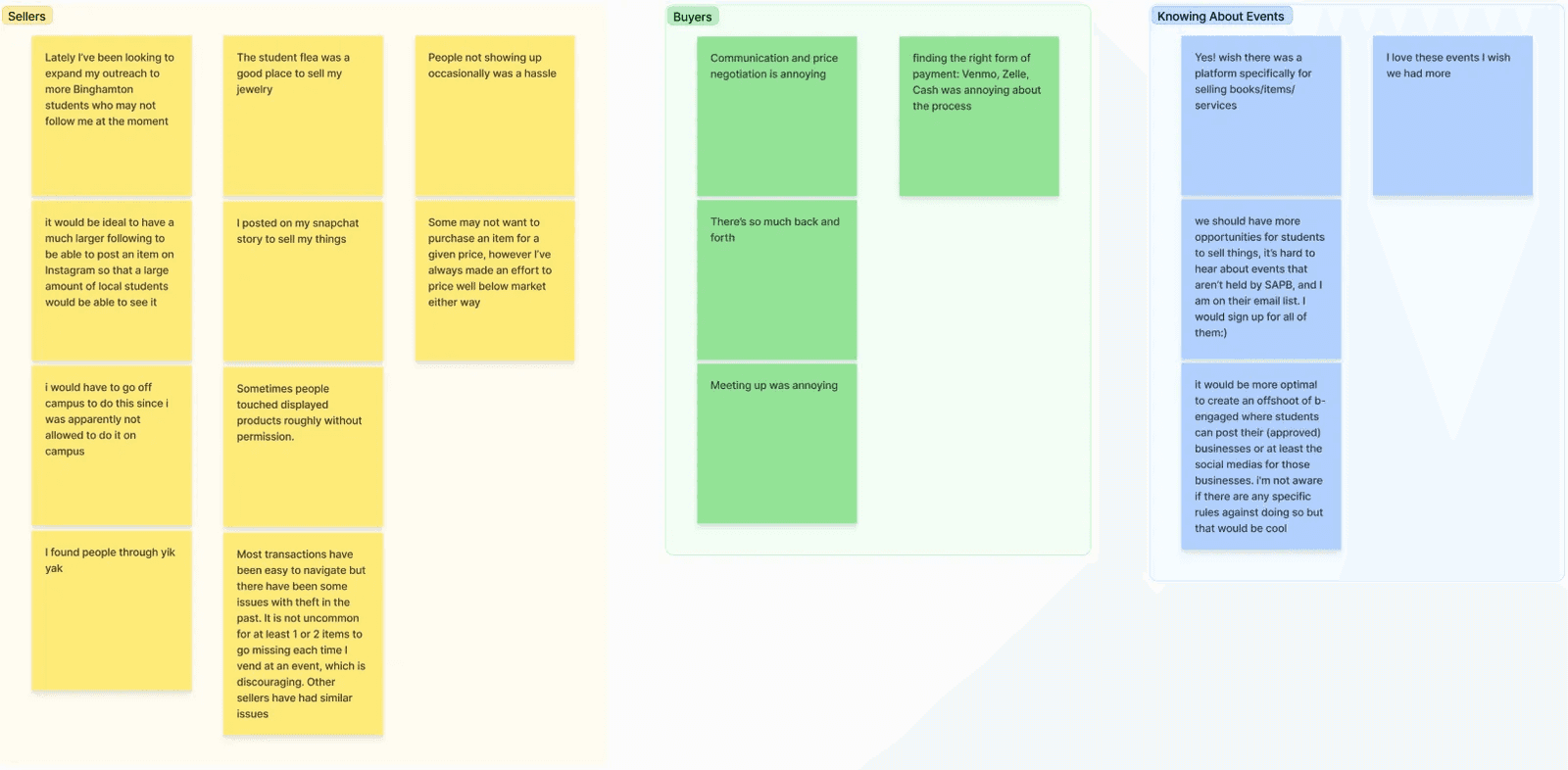
Based on our survey responses, we identified three key user groups:
Student Sellers – Those looking to sell or give away items.
Student Buyers – Those interested in purchasing or receiving items for free.
Event Seekers – Students looking to attend buying/selling events.
Insights
Insights
Our affinity mapping and research revealed that communication was the biggest pain point between buyers and sellers. To better understand user needs, we segmented our insights by persona, ensuring a clearer, more targeted approach.
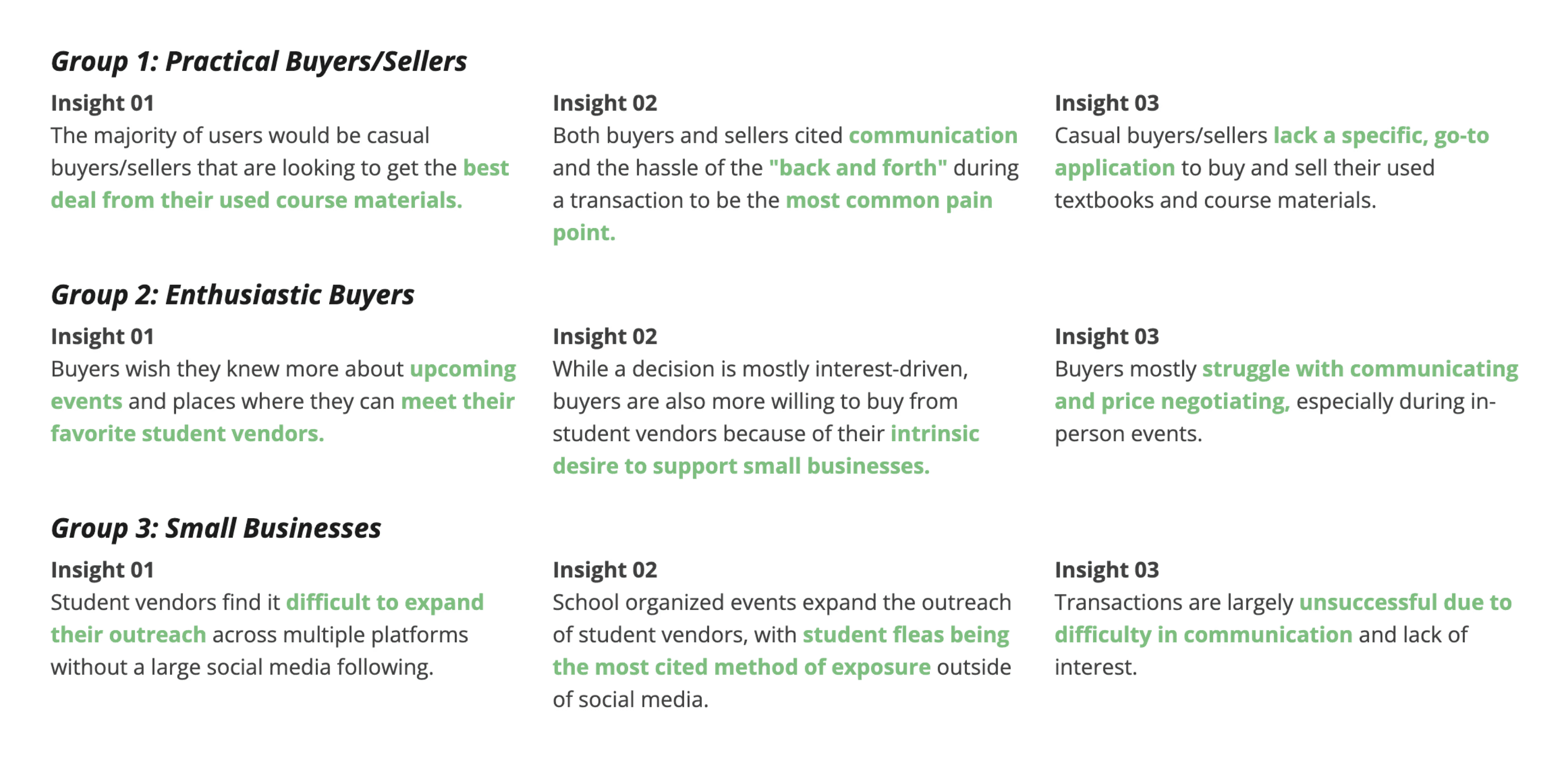
Our affinity mapping and research revealed that communication was the biggest pain point between buyers and sellers. To better understand user needs, we segmented our insights by persona, ensuring a clearer, more targeted approach.
User Personas
User Personas
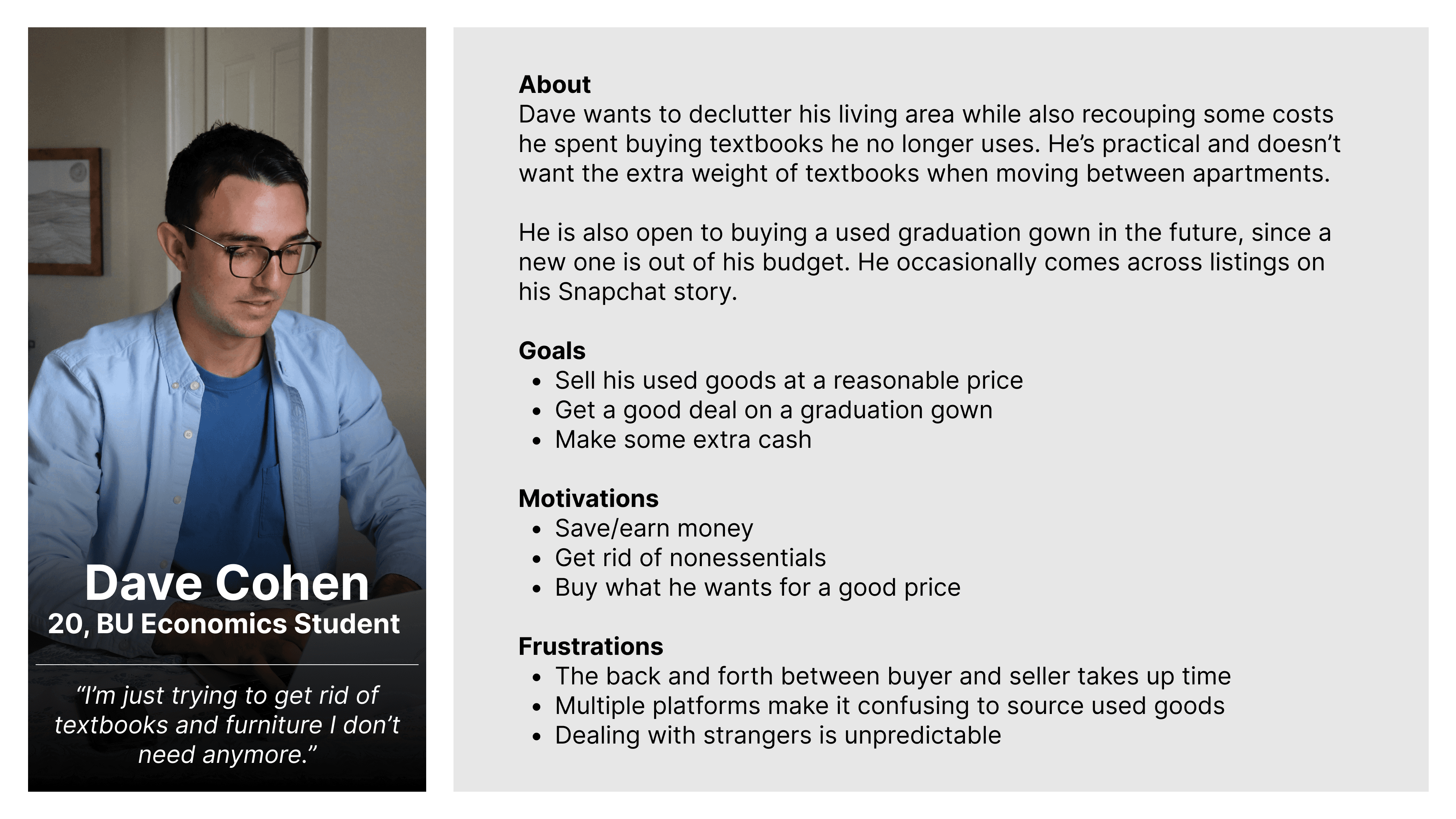
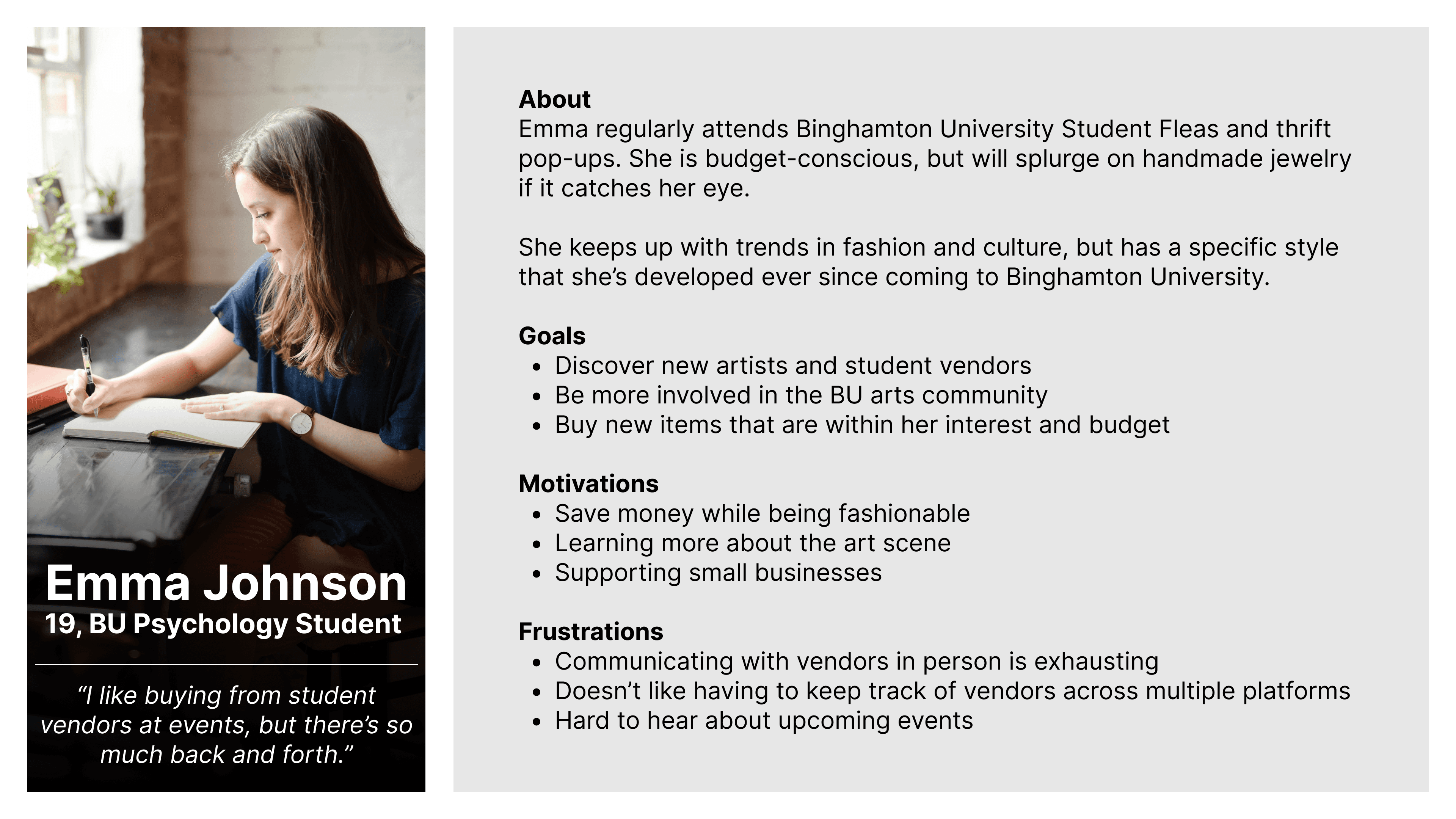
We leveraged our insights to visualize our target users and better understand their pain points.
Our research identified three main user groups:
Casual Buyers/Sellers – Those looking for occasional transactions.
Enthusiastic Collectors/Buyers – Users actively seeking specific items.
Small Businesses – Sellers using the platform to reach a broader audience
We leveraged our insights to visualize our target users and better understand their pain points.
Our research identified three main user groups:
Casual Buyers/Sellers – Those looking for occasional transactions.
Enthusiastic Collectors/Buyers – Users actively seeking specific items.
Small Businesses – Sellers using the platform to reach a broader audience
We leveraged our insights to visualize our target users and better understand their pain points.
Our research identified three main user groups:
Casual Buyers/Sellers – Those looking for occasional transactions.
Enthusiastic Collectors/Buyers – Users actively seeking specific items.
Small Businesses – Sellers using the platform to reach a broader audience
User Flow
User Flow
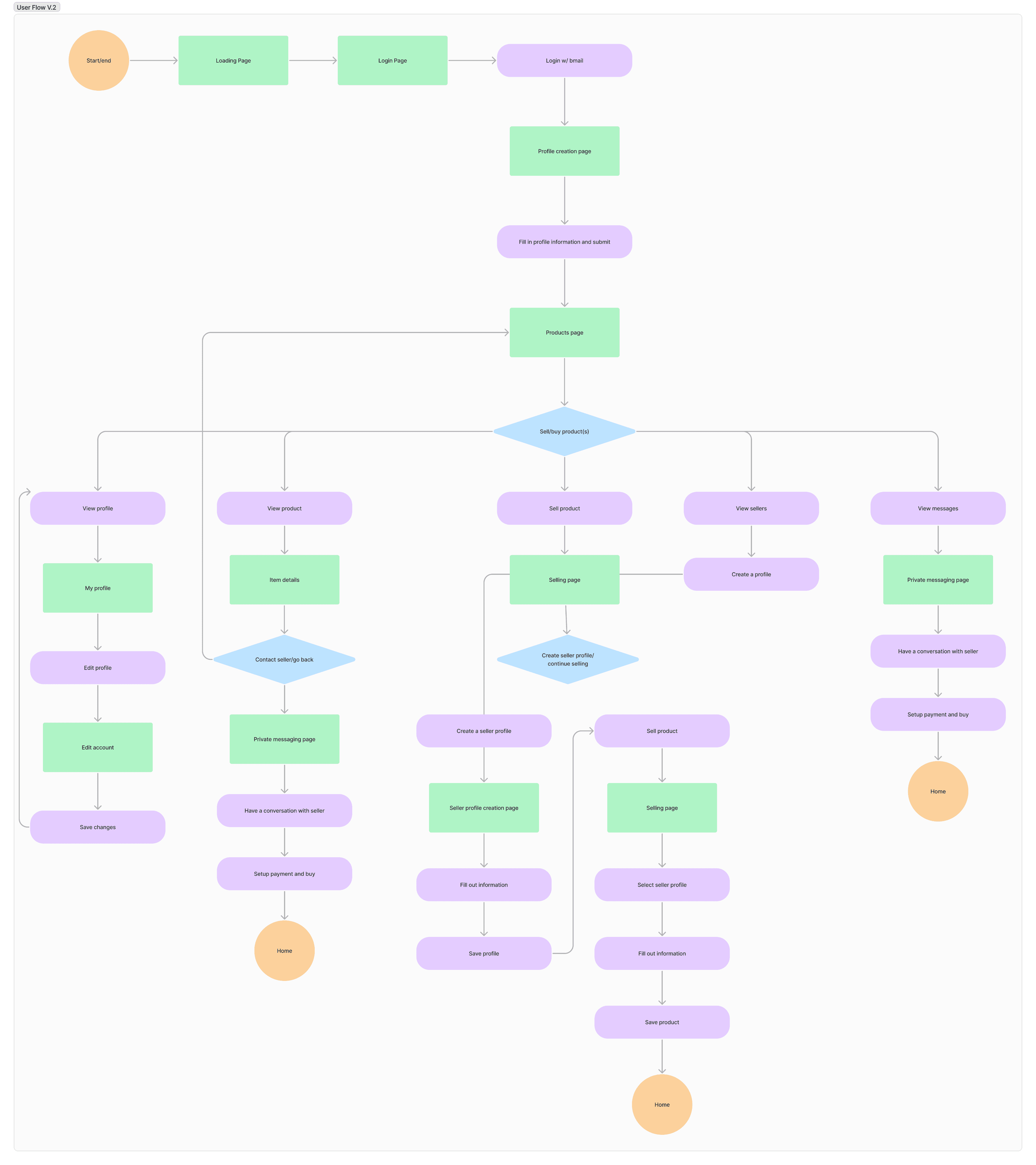
I integrated user feedback from our usability research into the final flow, refining our initial drafts to create a more intuitive user experience aligned with user needs, ultimately shaping Shop Bing’s navigation and overall structure.
I integrated user feedback from our usability research into the final flow, refining our initial drafts to create a more intuitive user experience aligned with user needs, ultimately shaping Shop Bing’s navigation and overall structure.
KEY:

ITERATION
Student Surveys
Student Surveys
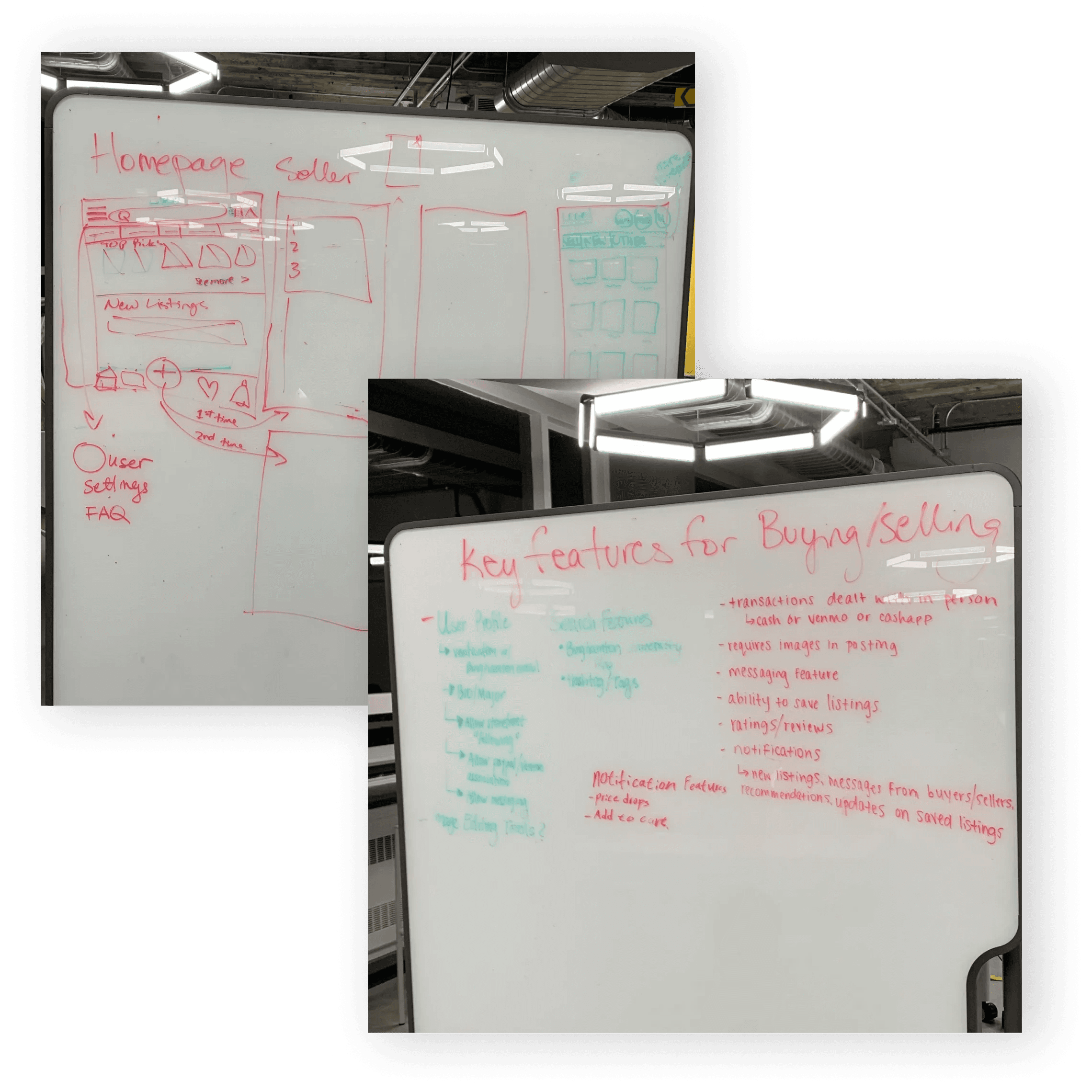
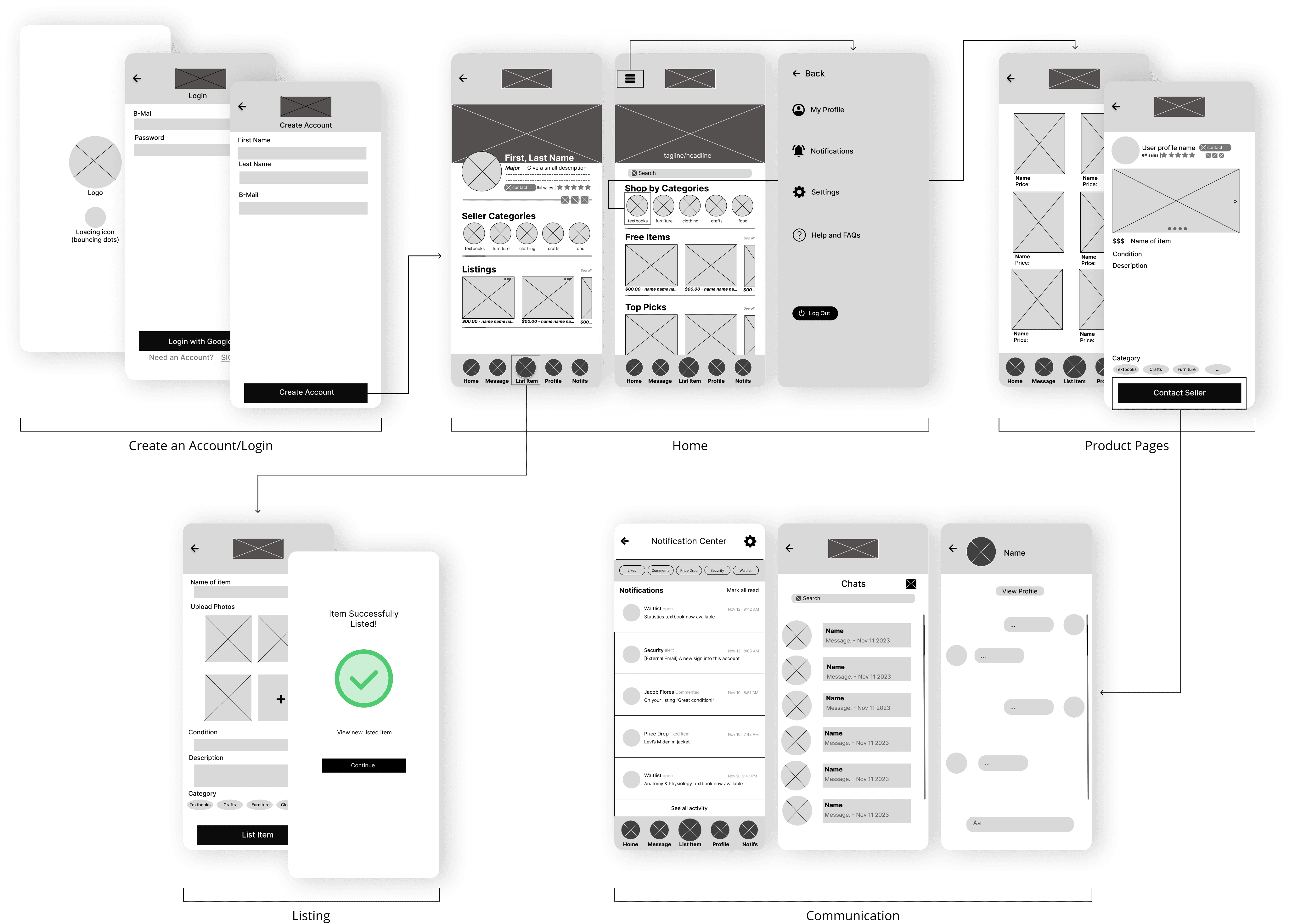
Based on our findings, we began sketching ideas before transitioning to Figma for design.
We continuously refined our initial wireframe through weekly Eboard meetings, addressing SWE implementation concerns. Additionally, we dedicated two weeks to redesigning the wireframe based on recommendations from our PM and SWE Team Lead.
Based on our findings, we began sketching ideas before transitioning to Figma for design.
We continuously refined our initial wireframe through weekly Eboard meetings, addressing SWE implementation concerns. Additionally, we dedicated two weeks to redesigning the wireframe based on recommendations from our PM and SWE Team Lead.
Iteration V1
Iteration V1
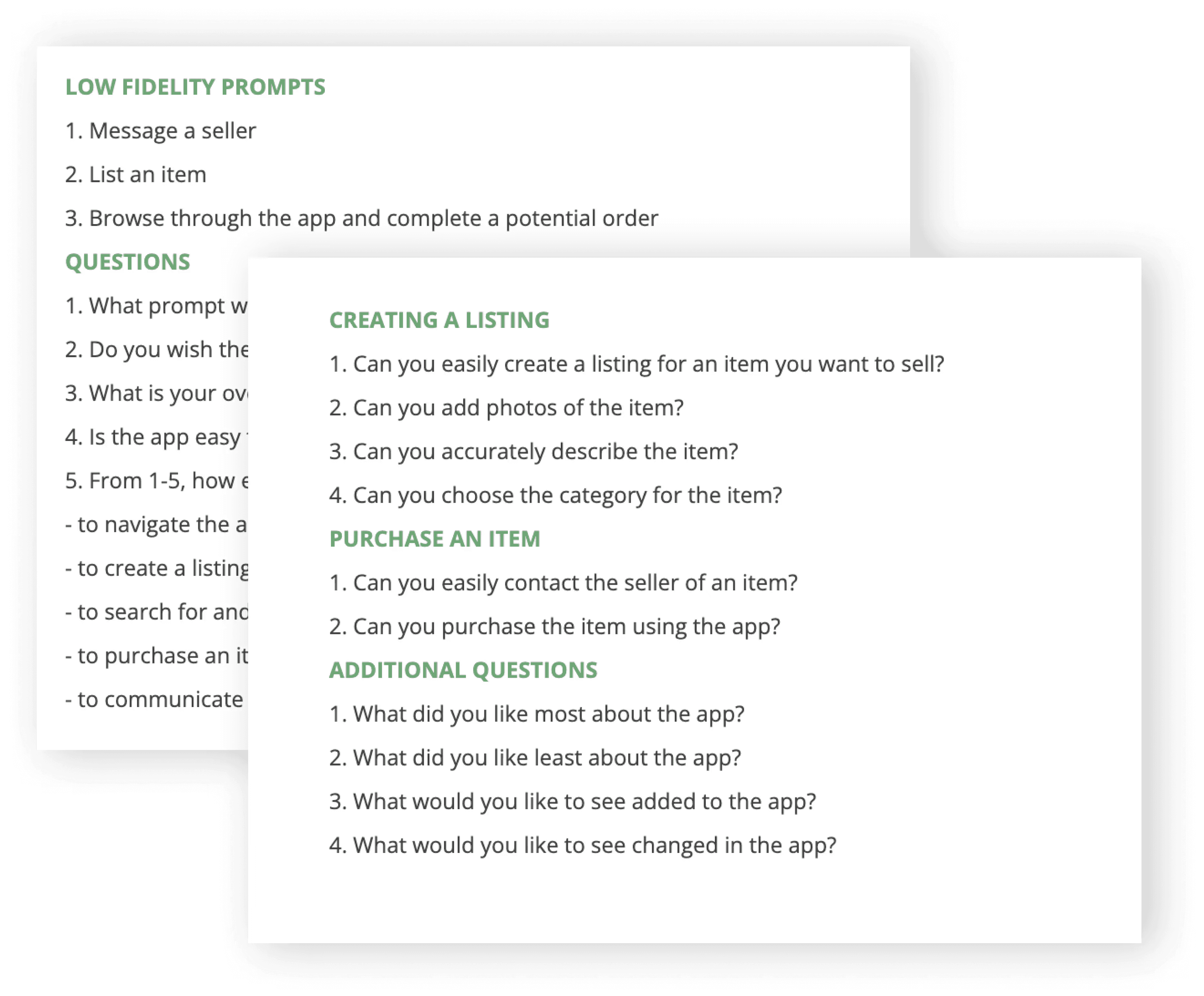
After refining our designs, we conducted usability tests to evaluate the app’s functionality. Our participants included six Binghamton students, primarily friends and roommates, who were eager to provide feedback and help improve the app.
After refining our designs, we conducted usability tests to evaluate the app’s functionality. Our participants included six Binghamton students, primarily friends and roommates, who were eager to provide feedback and help improve the app.
Iteration V2
Iteration V2
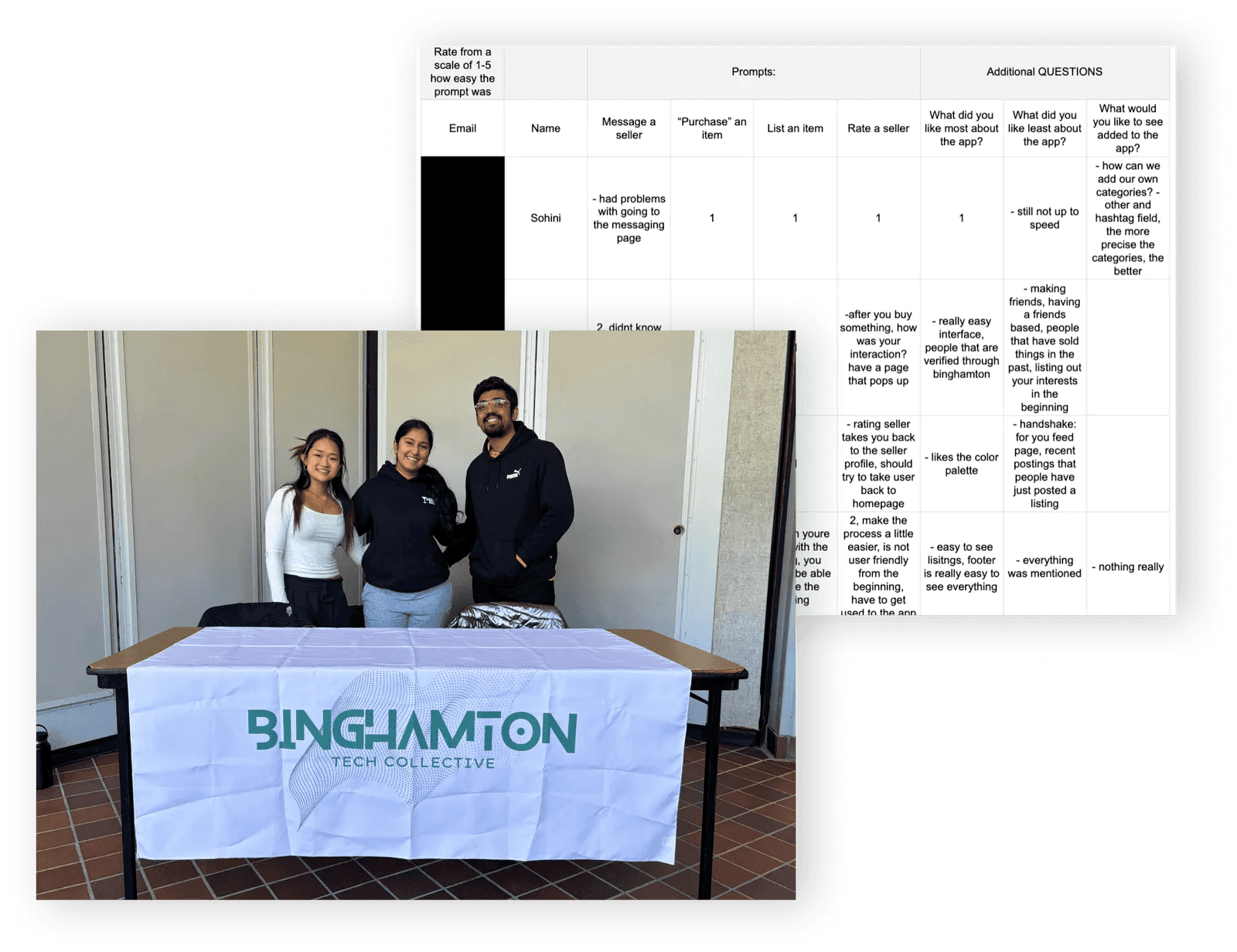
After refining our low-fidelity prototype based on the second round of feedback, we transitioned to high-fidelity design.
To further validate our improvements, we conducted another usability test at a TEDx tabling event, where four students provided ratings and valuable insights to enhance the user experience.
After refining our low-fidelity prototype based on the second round of feedback, we transitioned to high-fidelity design.
To further validate our improvements, we conducted another usability test at a TEDx tabling event, where four students provided ratings and valuable insights to enhance the user experience.
Improvements
Improvements
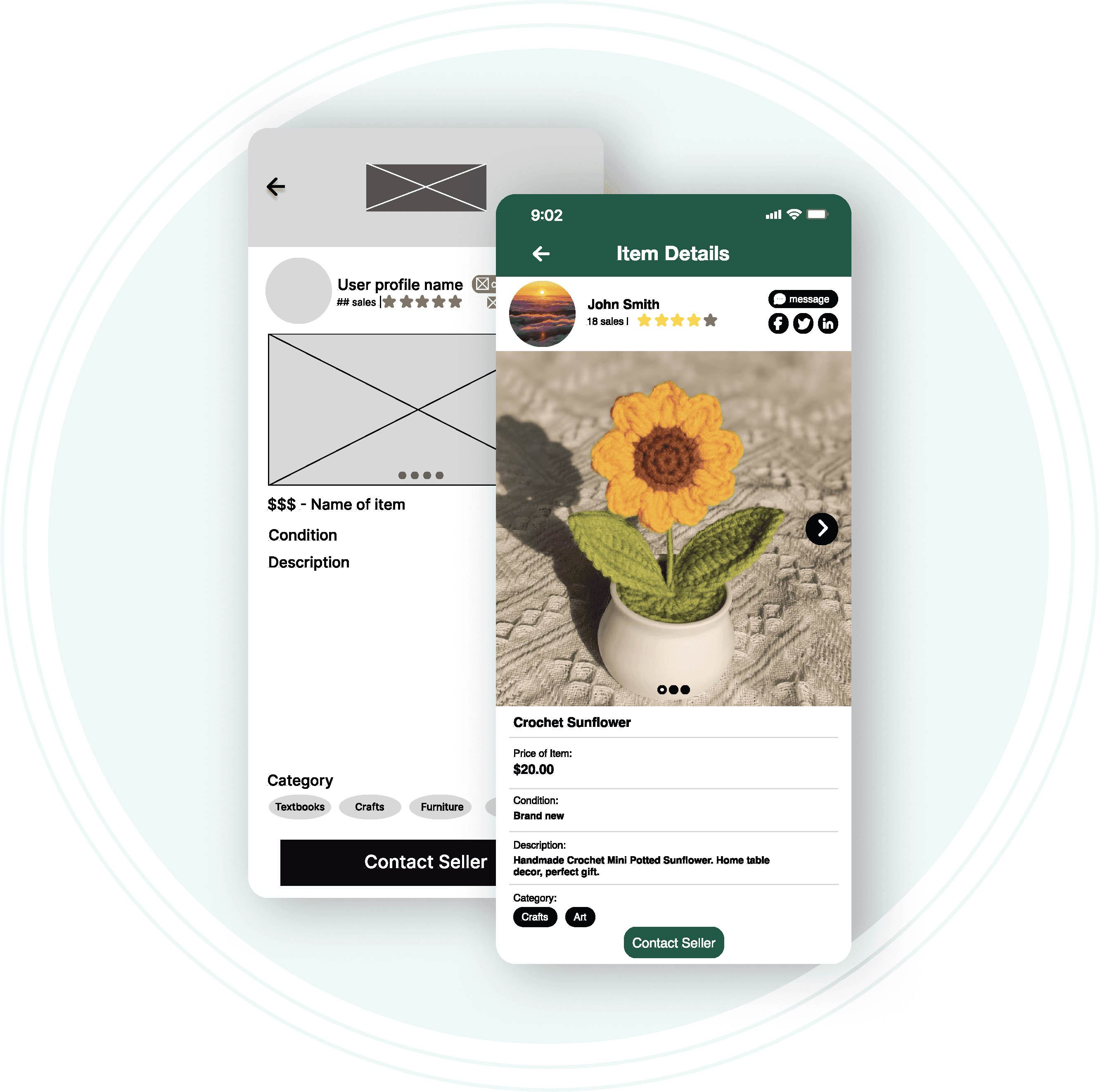
Our usability tests led to three key enhancements in our initial wireframes:
Our usability tests led to three key enhancements in our initial wireframes:
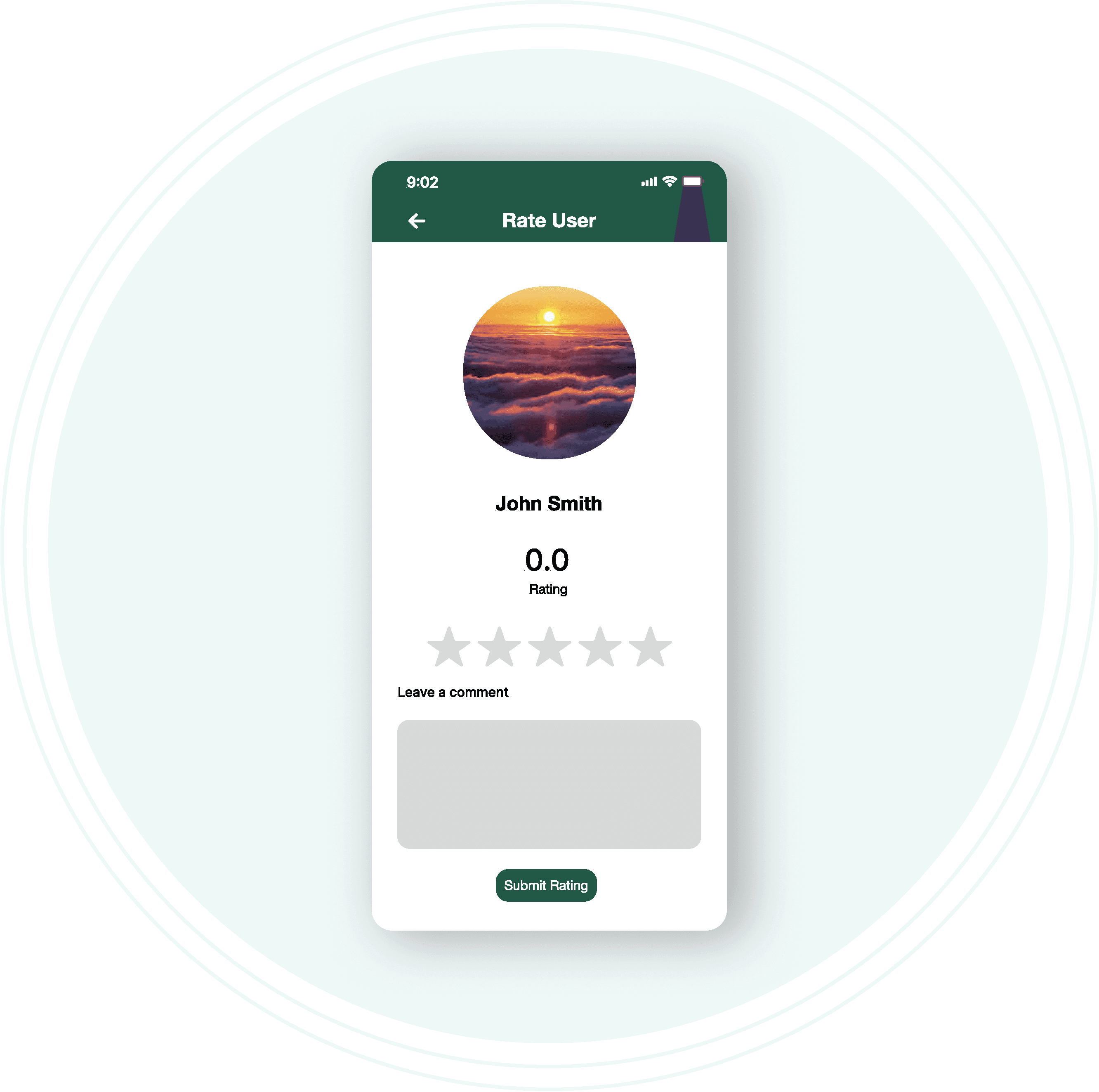
01
Implemented a rating system to establish user trust
01
Implemented a rating system to establish user trust
02
Developed a clearer content hierarchy to emphasize important information
02
Developed a clearer content hierarchy to emphasize important information
03
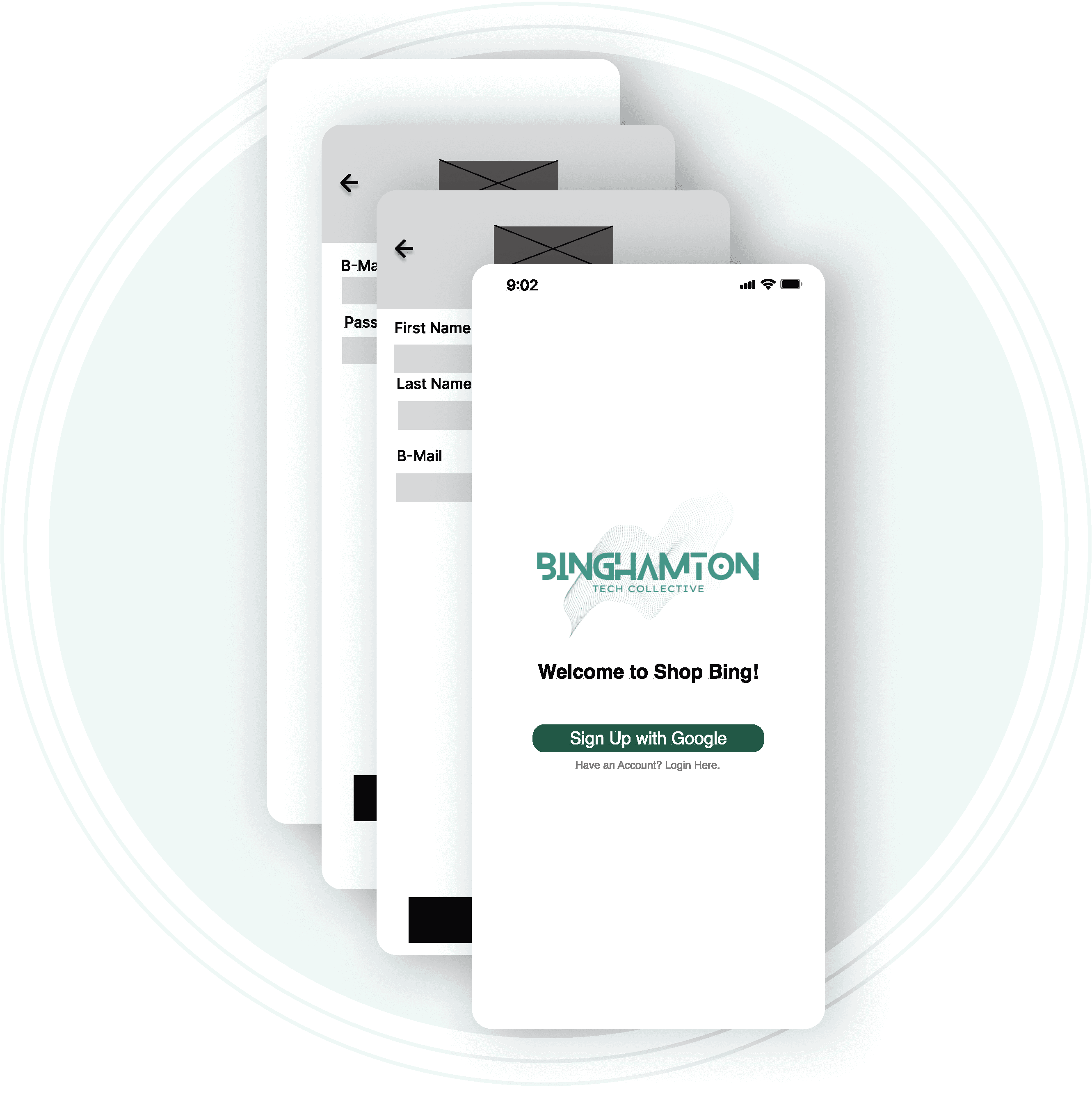
Condensed the sign-up process to reduce user strain and save on resources
03
Condensed the sign-up process to reduce user strain and save on resources
BRAND GUIDELINES
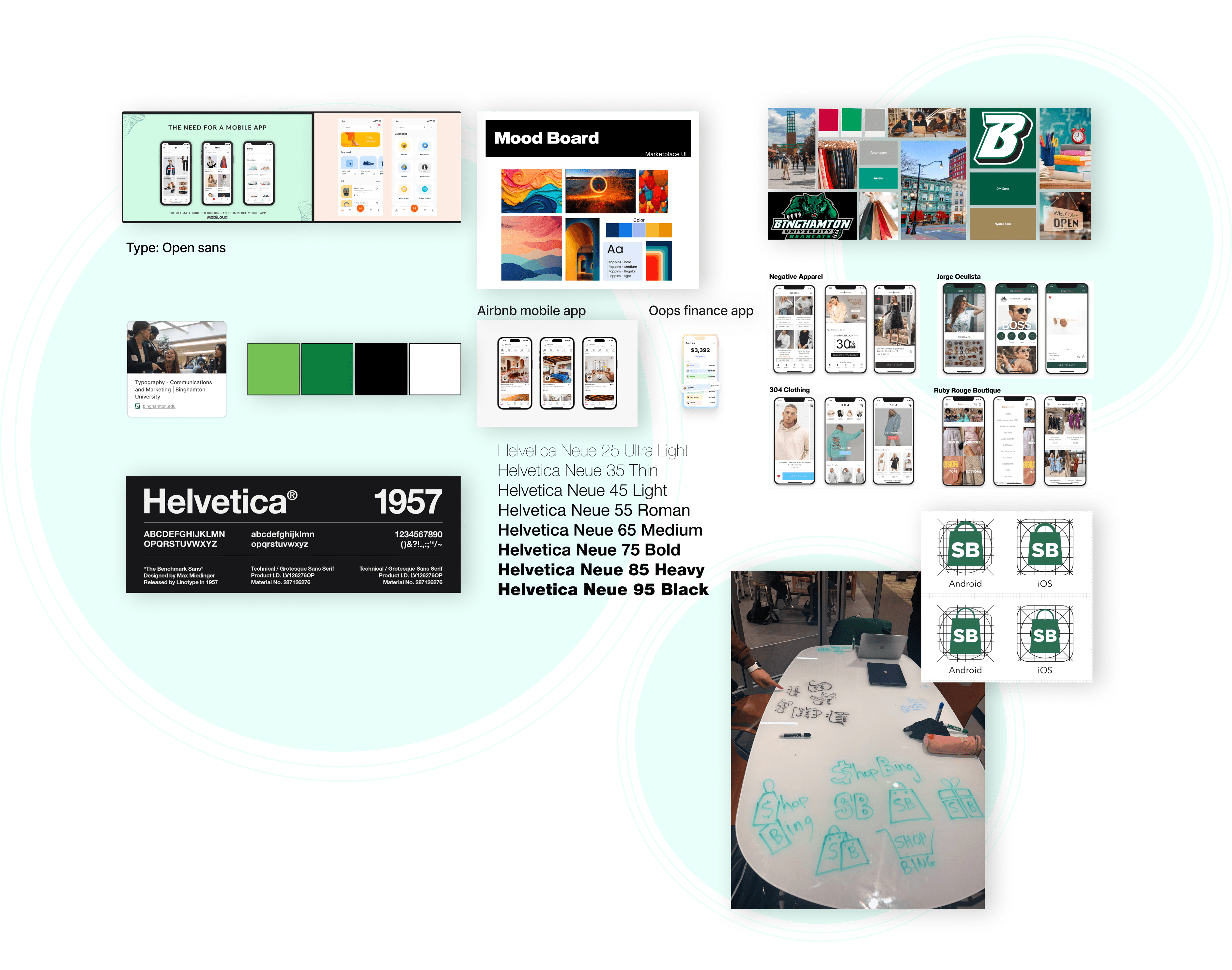
Brainstorming
Brainstorming
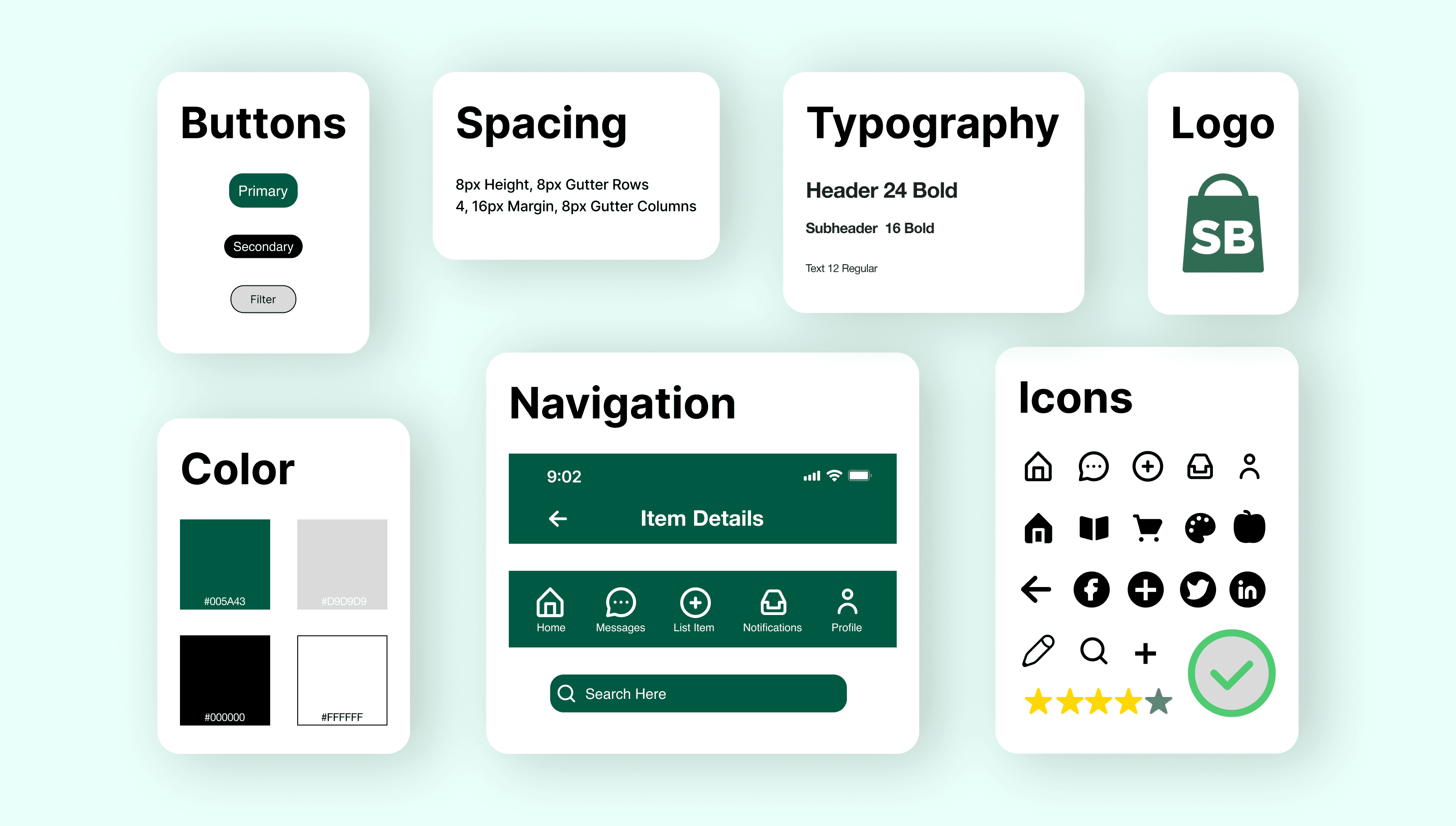
Style Guide
Style Guide
DESIGN
High Fidelity
High Fidelity
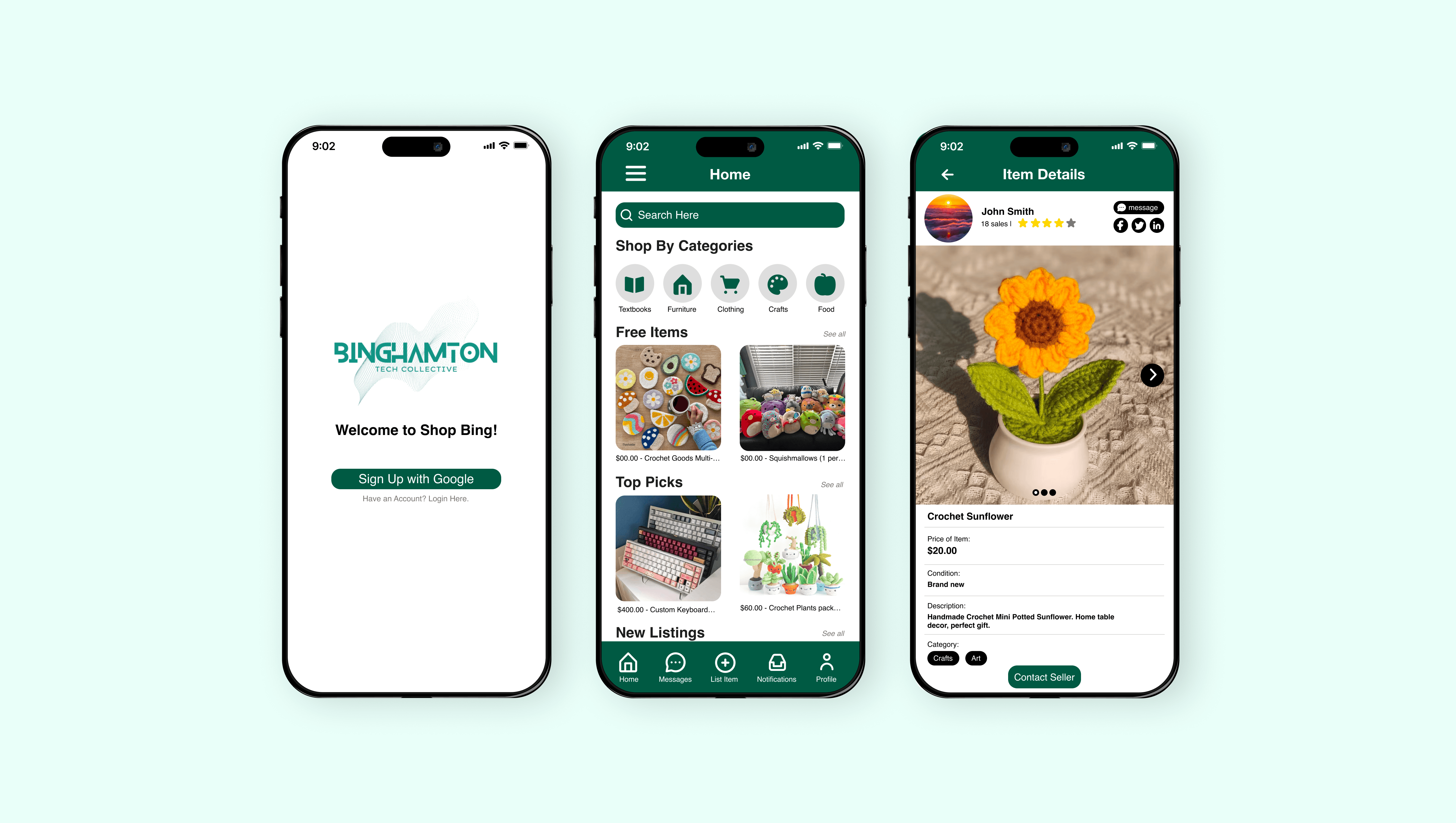
We used our research and established brand guidelines to design our prototypes:
We used our research and established brand guidelines to design our prototypes:
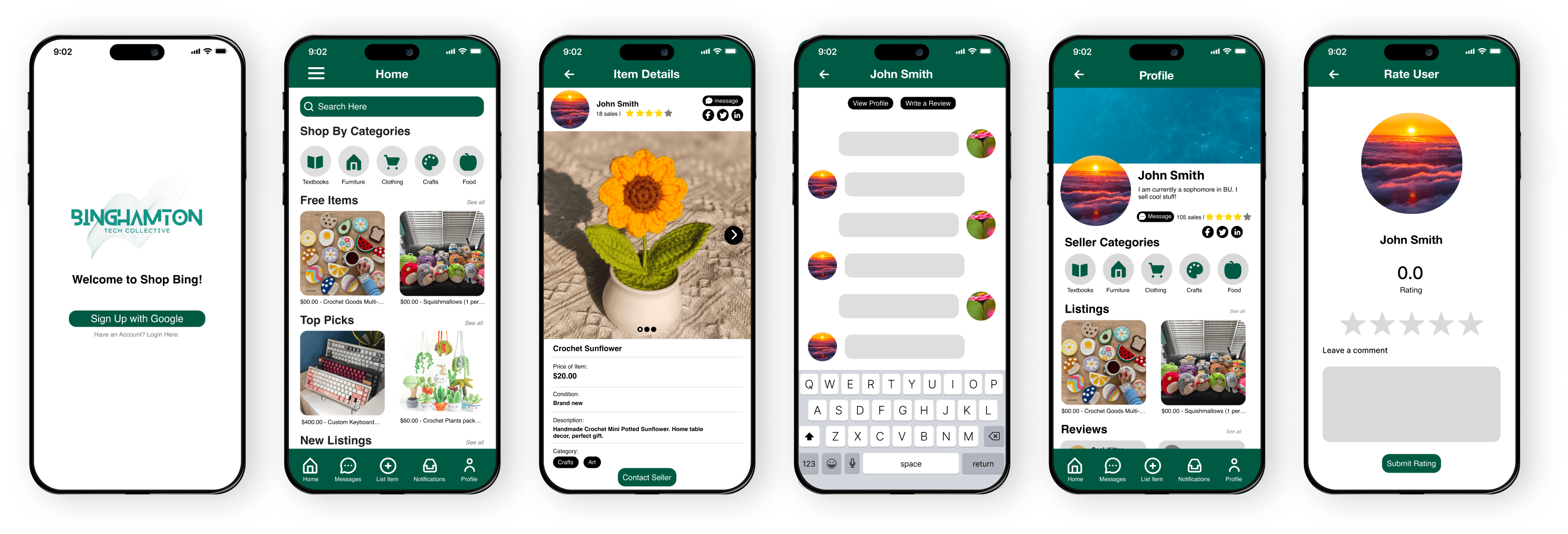
Features Highlights
Features Highlights
01
All-in-One Platform
All-in-One Platform
A single app for student interaction, profile customization, and buying/selling goods.
A single app for student interaction, profile customization, and buying/selling goods.

02
Enhanced Security through Verified Student Accounts:
Enhanced Security through Verified Student Accounts:
Login is exclusively through verified school email addresses, bolstering user trust and safety within the platform.
Login is exclusively through verified school email addresses, bolstering user trust and safety within the platform.

03
Streamlined Communication:
Direct private chats and the option to share social media handles facilitate easier buyer-seller interaction.
Direct private chats and the option to share social media handles facilitate easier buyer-seller interaction.

REFLECTION AND THE FUTURE
Outcomes
Outcomes
Shop Bing app launched on the web
Over 400+ users post launch
1 of 5 student organizations invited to Alumni Donor Dinner
1 UX and 1 Dev team bonded over a passion project :)
Shop Bing app launched on the web
Over 400+ users post launch
1 of 5 student organizations invited to Alumni Donor Dinner
1 UX and 1 Dev team bonded over a passion project :)
Takeaways
Takeaways
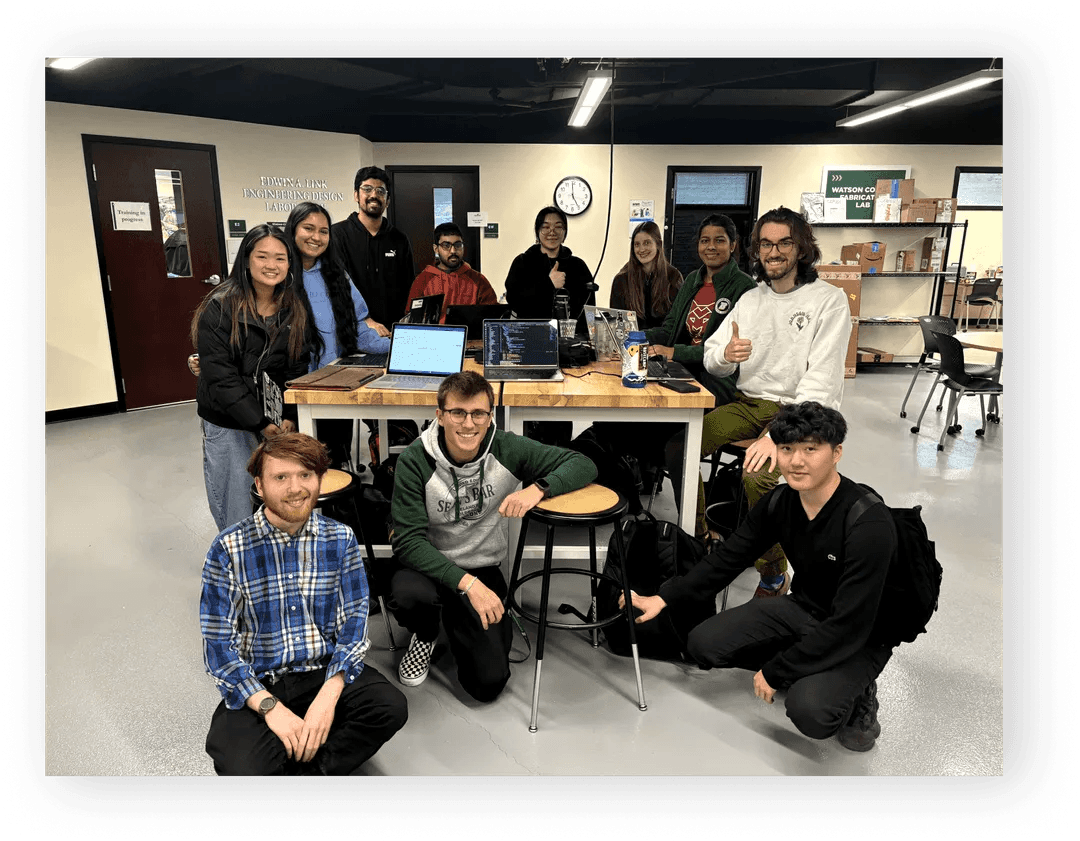
Cross-Functional Communication: A Key to Success
At the start of this project, the technical teams were deeply focused on their individual tasks, with UX and Dev teams only connecting during weekly eBoard meetings.
Through experience, we realized that maintaining consistent asynchronous communication was crucial. By staying aligned on constraints, concerns, and progress, both teams were able to make more informed design decisions, ultimately improving collaboration and efficiency.
Cross-Functional Communication: A Key to Success
At the start of this project, the technical teams were deeply focused on their individual tasks, with UX and Dev teams only connecting during weekly eBoard meetings.
Through experience, we realized that maintaining consistent asynchronous communication was crucial. By staying aligned on constraints, concerns, and progress, both teams were able to make more informed design decisions, ultimately improving collaboration and efficiency.
Cross-Functional Communication: A Key to Success
At the start of this project, the technical teams were deeply focused on their individual tasks, with UX and Dev teams only connecting during weekly eBoard meetings.
Through experience, we realized that maintaining consistent asynchronous communication was crucial. By staying aligned on constraints, concerns, and progress, both teams were able to make more informed design decisions, ultimately improving collaboration and efficiency.
Limitations
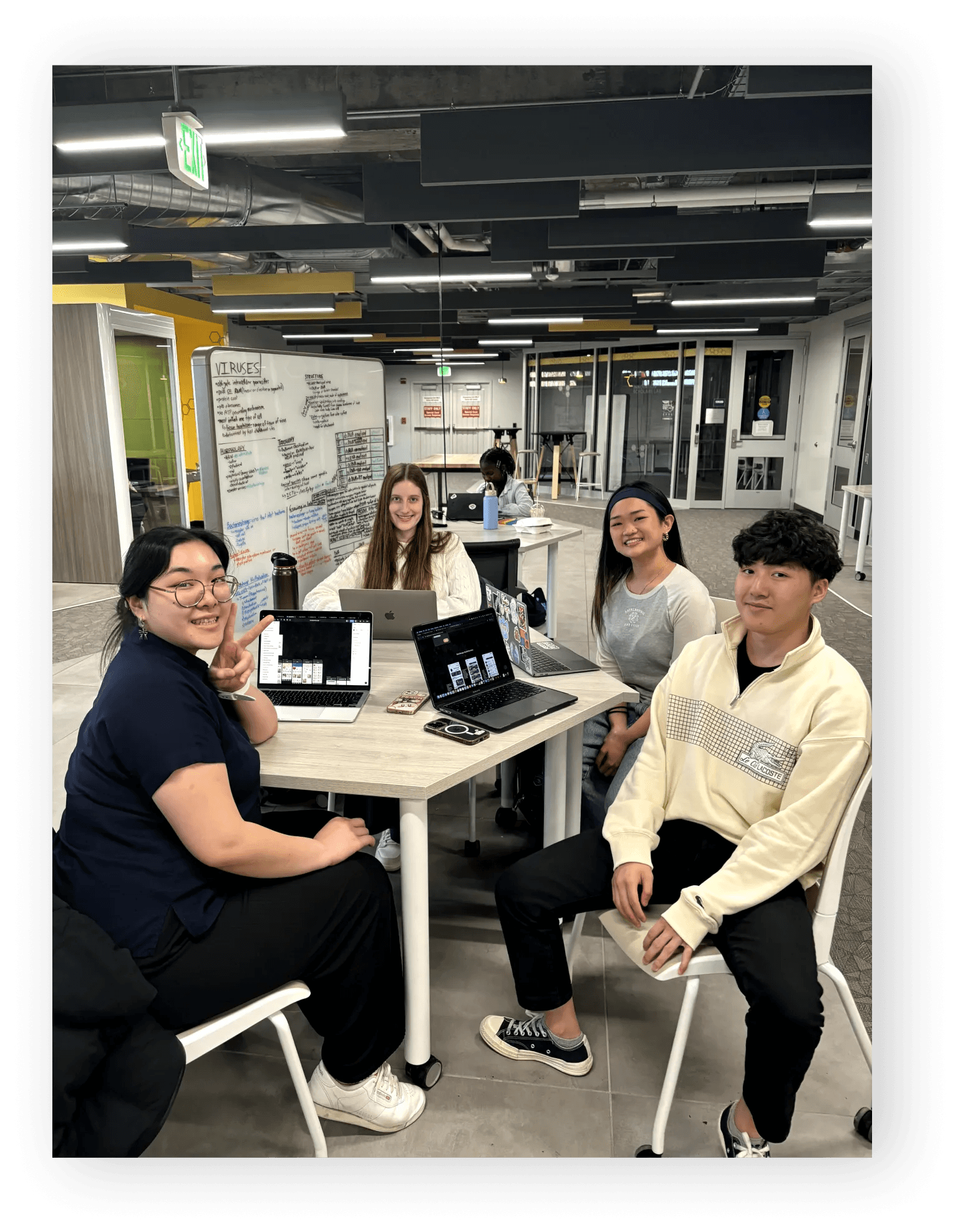
Understanding the reality of a student-run product team.
There were so many things that we had to learn as we built Shop Bing, such as the costs of data storage, redesigning based on skill levels, and even the process of putting our app on the Apple Store.
Additionally, legal concerns such as the inability to handle in-app transactions or a DUNS # made us rethink the way we designed Shop Bing.
The Future
How can we address discrepancies in the UI of the application after an app page has already been spec’d out?
How can having a “like” feature that gives users the option to favorite products improve the user experience?
How can we build a notification system?
Understanding the reality of a student-run product team.
There were so many things that we had to learn as we built Shop Bing, such as the costs of data storage, redesigning based on skill levels, and even the process of putting our app on the Apple Store.
Additionally, legal concerns such as the inability to handle in-app transactions or a DUNS # made us rethink the way we designed Shop Bing.
The Future
How can we address discrepancies in the UI of the application after an app page has already been spec’d out?
How can having a “like” feature that gives users the option to favorite products improve the user experience?
How can we build a notification system?
Our teams are currently focused on:
Shop Bing is an ongoing project at Binghamton Tech Collective. As UX Team Lead, I'm working with my team to prioritize the following goals for its continued improvement:
Have Shop Bing been launched on the Apple Store
Since we're dealing with user data, this process has been extremely lengthy. We've collaborated with professors who suggested that we focus on increasing our user base
Implement a way for users to confirm their transactions to provide metrics for stakeholder buy-in
Facilitate communication even more through price negotiation buttons or pre-written responses
Our teams are currently focused on:
Shop Bing is an ongoing project at Binghamton Tech Collective. As UX Team Lead, I'm working with my team to prioritize the following goals for its continued improvement:
Have Shop Bing been launched on the Apple Store
Since we're dealing with user data, this process has been extremely lengthy. We've collaborated with professors who suggested that we focus on increasing our user base
Implement a way for users to confirm their transactions to provide metrics for stakeholder buy-in
Facilitate communication even more through price negotiation buttons or pre-written responses